12 January 2011

Yoghurt pie and grain salad

What I like about Ottolenghi is that he suggests things I’d never make myself without prompting in a million years. Anyone can dream up a few salads or roast veg tarts and the like, but mixing yoghurt with chopped herbs and nuts, thickening it with flour and baking it is a combo that would not have cropped up in my head any time soon. Obviously I have inherent cultural bias and all the rest but just saying...


As ever the ingredients were tinkered with as I’m mean and don’t like buying things when other things I have can do the job. Check the official recipe.


The nature of the beast is this: fry some onion or shallot, toast a few nuts, chop lots of herbs and mix with rich (‘Greek’) yoghurt to form a thick paste. Season. Thicken this with flour and encase with vine-leaves slathered in melted butter and olive oil in an oven-proof dish. Sprinkle with breadcrumbs and bake for forty minutes.


Pine nuts can be a bit dear and I found the walnuts I had worked fine. I also used normal flour instead of rice with no obvious adverse effects.


I’ve gotta say I was initially wobbling on the fence a bit with this one – not outright horrid or anything you understand but not a straight-off head nodding success. But having some of it later and cooler after a trip to the pictures it started to make more sense. Rather than a hot pie this is much nicer as a room temperature slice of contrasting but complimentary flavours and textures – the leathery, briney vine leaves, the modest crunch of nut and crumb, the herbs in their giving yoghurt matrix, the butter sheen of fat that coats the thing. In fact, looking back at the recipe Otto specifies leaving it for ten minutes to cool – something I totally missed - eek!


If I made this again I’d serve it more as a mezze component and add garlic to the onion/shallot stage.

We had the pie with roast toms and grain salad – all you do is chuck in small amounts of every grain in the cupboard according to cooking time and then flavour when cool. We had puy lentils, rice, bulgar and orzo pasta with chopped preserved lemons and olive oil. Delicious.

10 January 2011

Pasta e fagioli

Fiending for a cheap and cheery soup fix I trawled my Google reader archives and found this excellent looking recipe for Pasta e fagioli. As a peasant dish I think the ingredients are fairly flexible and I was happily able to make something from the stuff in my cupboard and fridge. Out went the bolotti beans and in came the chickpeas. Some beautiful tiny tomatoes went in instead of a whole tin and a crumbled dried chilli or two subbed for the fresh one. Also a drop of cream left over from the pheasants. What’s good here is that if you include a decent amount of pasta it becomes a meal in itself. The gentle crushing of the veg releases enough starch to thicken the liquid which raises wholesomeness and satisfaction levels.


The ingredients can be found in the link. I added some extra parmesan at the end and only roughly followed the recipe but can confirm it a good one. Thanks rachel eats!

8 January 2011

Xmas 2010

Bit late on this.

Smoked salmon and cream cheese bagels for breakfast


Roast pork loin, parsnips and potatoes, swede and carrot puree

We had this with the sauce from the roast pork loin dish in Nose to Tail - roast garlic, parsley, capers, anchovy, olive oil and red wine vinegar. Not was christmassy but well tasty. I love a roast like this without too many elements as the full trimmings at xmas can mingle together and become a bit of a greasy mess sometimes.

Pedro Ximenez sherry - sweet like chocolate

4 January 2011

Pheasant stew

One of the better presents I got for xmas this year was two dead pheasants in a plastic bag. I have never hung, plucked, skinned or gutted a pheasant or any game bird but that, of course, made the process all the more interesting.


Hugh suggests around five days for the ideal hanging period and that, through happy circumstance rather than supreme planning skills, was exactly what these guys got. The hanging was done in a plastic bag suspended on string through the window of my sitting room and anchored to the radiator. The hanging process gives flavour and character to the meat by allowing it to begin the first stages of decomposition.

The thought of plucking the birds was a little daunting so I decided simply to skin. Not remotely knowing what I was doing, I sharpened up my favourite knife and slit the skin down the front of the birds' chests. This peeled off fairly easily and a few more slices around the top bit of the legs meant I could rip off a trouser like configuration of copper feathers and sticky skin. Some more cutting at the head end allowed me to get the crop out – packed full of grain in both birds - without puncture. Slashing the abdomen released the innards into the bin. The livers of the birds seemed incredibly hard and distended – a result, perhaps, of them gorging on freely available grain – but the pungency of their viscera disinclined me to root through the bloody strings and clumps in the bin and I must embarrassingly admit I chucked the lot. Just think – possibly two natural and humane pheasant foie gras wasted. Oh for shame.


The legs were easy to snap off and remove but I ended up chopping the carcass in a rather irregular manner probably not known to any reputable school of butchery.

Check the outrageously yellow fat

I followed a really basic recipe for these – browned meat, bacon fried to render its fat, lots of standard veg (onion and both carrots and celery in big amounts to serve as an actual feature and not just background flavour mulch), wine, dried herbs and an hour-and-a-half 'pon the hob. I think white wine might have been best as the red sent the stew a grey colour.


The flavour of the pheasant was very fine. Chicken like, but with a denser and drier meat and with a musty countryside aftertaste, especially in the leg parts. The bacon and veg did the business as expected and the resulting stew, finished with a little lick of cream, was hearty and pleasingly unfussy. We ate it with potato and parsnip mash with plenty of pepper in which was a delight. Many thanks to the pheasant bringers - you know who you are.


Proper

Happy 2011 dear readers!

22 December 2010

Eating out in 2010

Moderately hidden gems
I don't think there is any point in detailing some of the great places to eat in London that are well known so here are a few others.

Jai Krishna - if you live in London and like food and haven't been here then check yourself. It's essential. Cheap, pure veg menu and used to feel like you were sat in somebody's front room having a curry and looking out onto Storud Green Rd. Now slightly done up but the prices don't seem to have risen and you can pick up a beer from the nice chap in the offy over the road to bring in and drink. Ten minutes walk from Finny P tube.

Curry & Rice on Whitecross St is a true lunchtime gem. Canteen, home-style Indian food. You can get a good lamb biryini for five quid with gravy, shredded salad, raita and chilli sauce. The amount of rice is a bit OTT for lunch and it isn't packed with huge chunks of meat but I don't think you really need it in the middle of the day and the flavours are spot on. It's got some heat in it and big bits of cinnamon. The descriptions of the meat curries don't really get beyond 'lamb' and 'chicken' but you can get rice and channa for three pounds and rice with two veg curries for four. Also available is the underrated egg curry which is nice to see. All good hangover busters.

Spice & Grill in Clapton is a similar canteen type place. I've only had a samosa on the hoof but the curries look good and tasty.

Silk Road, Camberwell - ok maybe it's not that hidden if you read many food blogs but believe the hype, this Xinjiang restaurant is amazing. Their medium plate chicken is going down as the best thing I ate in 2010. A massive pot of savoury liquor - red-brown and with aromatic anise steam rolling off it. The meat is in there on the bone as it some veg and chilli but it's really the flavour of the stock that is so incredible. When you are most of the way through some gummy noodles made in the back are introduced to finish off with the liquid. Cheap too (bit of a theme emerging here!).

Cafe East does the business in proper Vietnamese style worthy of Kingsland Road's top tier in the bizarre surrounding of Surrey Quays leisure park.

Maltings Cafe is the epitome of a modestly sized cafe doing a small menu of food extremely well and at good prices. I had a delicious sliced onglet with caponata for lunch for eight pounds! Respect due, more places should be like this. Big sister Zucca also good.

Railroad on Morning Lane in Hackney deserve a shout for their baked eggs. Good addition to Hackney Central area for when curry club at 'Spoons ain't going to do it.

Others
Confirmed favourites Chilli Cool, Mangal, Tayyabs, Bread and Wine, Anchor and Hope and Great Queen St all satisfied and delighted this year in various ways, as did other places new to me - The Drapers Arms, Koya and Barrafina. I've now tried all but one of the Vietnamese joints on Kingsland Road and have found them usually pretty good. I'd go to Tay Do cafe for a cheap BYOB job and Viet Grill for a posher do but would be pretty happy at any. Bellaphon has a nice write up of the 'Pho Mile'.

For supper clubs The Shed delivered to the max with the holy combination of generous portions, cheap prices and amazing home-cooked food, Fernadez and Leluu served up some delicious stuff over a whole evening (I missed the last and best two course of lamb and chocolate pudding by accidentally drinking a massive amount of wine and being so drunk I left the table and stumbled off without paying (rectified soon after naturally!)) and the excellent host of The Claptonian Arts Club gave us a nice Scandi breakfast and a friendly natter about the current state of the art scene in London to boot.

Give us a shout if you think I've missed anything crucial and thanks for reading as ever.

13 December 2010

Congee Mk 1


I've wanted to cook congee for a while and finding myself still suffering under the tail of a hangover one day at 6pm a bowl of rice cooked in a single pot sounded like a good idea. There was no proper stock involved in the making of this congee nor is it remotely authentic I expect.

Ingredients
  • three cups of rice
  • shrimp satay sauce, nam pla, garlic, ginger, dried shrimp, sweet soy sauce
  • peas, kale, bamboo shoots, spring onions
  • sausages

Two to three cups of easy-cook rice I mixed with about twenty cups worth of water and simmered until the grains start to break down and loose their individual structural integrity. I included some ginger and garlic from the starts, thinking they too would break down in the long cook and give some nice background flavours. Having never cooked congee before I wasn't sure of how long they rice would need and man it does need quite a while! You could still see the grains in mine by the end, held in a starchy matrix, but some pics seem to show the grain totally broken down to a paste.


In lieu of stock proper I added some sweet soy, hot shrimp satay sauce, nam pla and a pinch of veg bouillon. After a good hour and a half I chucked in the other things according to cooking times. Some sausages needed eating up so popped out of their skins and fried they made excellent meat balls. Bamboo shoots had the texture of artichokes in brine and a slightly nondescript or almost mildly fishy taste. When everything looks done serve with some deep fried shallots on top.

Hearty

What a wonderful food. I guess that lots of Asian countries have their own versions of congee and it's not hard to see why - a modest amount of staple grain can be eked out a long way and flavoured with what ever is to hand. It's not far from risotto or paella though the UK doesn't really have a soup/stew based on a grain I can think of. A good chance to mess around then perhaps, and do a suitably patriotic British version.

6 December 2010

Terrine mishap


I remember exactly the point at which trotters at Theobold's stopped being 50p each. I asked for four to stick in the freezer and when the guy came back from downstairs with a fat bag of pig feet and started to weigh it I knew something was up. They ended up being about seven rather than two quid. Perhaps this marked the end of the offal honeymoon? Theobold's is still a fantastic butcher though and the trotters were huge. Having been deeply frozen in my possession for a while now one thing seemed like sense - ham hock terrine.

First problem was that the butcher (a different one) didn't have any ham hocks (he claimed that suppliers are meanly stockpiling them in anticipation of heightened xmas prices). He suggested I buy one of his gammon joints and rely upon the trotters at home to set the mix. This lead to the other problem - the terrine failed miserably and ended up looking like the prototype of some new premium product aimed at the pampered dog market.


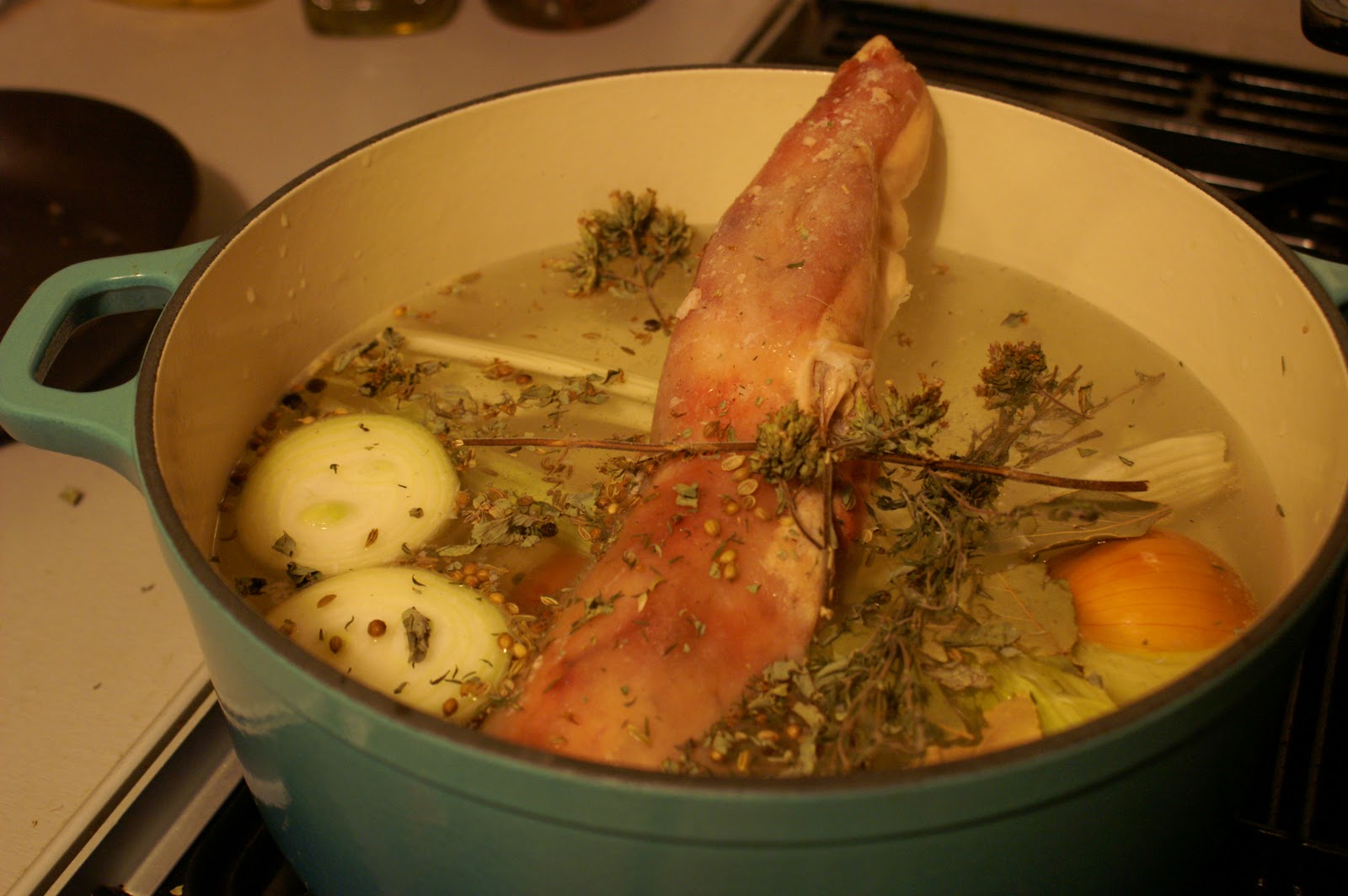
I made a standard stock with the trotter. After a thorough boil the mix was strained and reduced. The gammon was cooked and the cubes put into the mix to cool and solidify.


The pieces looked nice and meaty here.


It still looks ok-ish if you like your pig in chunks and suspended in cloudy meat jelly.


But now see - collapse. And it looks 'orrible.

This mess is now frozen but stayed tuned for details of the rescue mission. I'm thinking of pork, leek and mustard fried potato-cakes and maybe an English type risotto with barley and more leeks to repair the damage.