Showing posts with label garlic adventure. Show all posts

18 May 2012

Garlic soup

This recipe was brought to my attention by a friend who cooked it for dinner once. It's a version of garlic soup which uses both roast and raw garlic cooked in the soup mix to create a distinct but far from overpowering flavour, which is then enriched by parmesan and cream.


You are going to need -
  • 26 garlic cloves (unpeeled)
  • some olive oil
  • two small sliced onions
  • a teaspoons chopped fresh thyme
  • 18 garlic cloves, peeled
  • four cups of chicken or veg stock
  • some single cream
  • finely grated parmesan
  • plenty of lemon

Roast the unpeeled garlic for around 40 minutes. Fry the onions with the thyme for 15 minutes with some olive oil.

Add the raw garlic, the roast garlic (sans jackets naturally) and the stock and cook for half an hour. When everything seems ready blitz the mixture, remove from the heat and add a little cream. Serve with a grating of parmesan and a squeeze of lemon.

I'm not sure this recipe needs as much cream as the original blog suggests. It does make a wonderfully tasty and rich soup, a perfect starter in fact, but with a little less you could have a larger bowl of it which, with some bread, would make a good lunch.

The lemon really lifts the taste and should not be missed. I wonder if perhaps it's possible to skip the roasting stage of the garlic to simplify the recipe and make things quicker? Either way, it's delicious.


3 April 2012

Red braised pork chops with carrots and garlic


Another day another Szechuan pork dish. I've cooked red-braised pork quite a few times - it's a total Chinese classic, a piece of piss to do and reputedly Mao's favourite meal. You braise pork in some liquid flavoured with cooking wine, soy, aromatic spices including star anise and cinnamon, a little dried chilli and sweetened with sugar. When the pork is tender you are done. Couldn't be easier really, and doubtless there's any many local variations as there are cooks.


Now Chinese culinary doctrine will tell you that everything in a meal has to be a similar size and grab-ale with chopsticks. European cuisines are more familiar with a large single piece of meat that can be cut with a knife and accompanying veg to be scooped with a fork. This is a slightly Anglicised version of the Chinese classic then - whole pork chops red braised, this time with lots of garlic and some carrots.

  • pork chops
  • half a head of garlic per person
  • two carrots per person
  • Soy, Shaoxing wine, veg oil
  • two chillies, one star anise, one stick cinnamon
  • sugar

Give your pork a quick purge by adding cold water and heating until it begins to boil and scum comes off the meat. This step allegedly cleanses the meat, although I'm unsure of the actual scientific thought behind the process.

Heat a couple of tablespoons of sugar in a pan with some oil until it turns liquid. Add all the other ingredients except the carrots and top up with water.


Simmer away for fifteen minutes and add the carrots in big chunks. Give everything a stir and flip the meat around so it all gets cooked. Simmer for another forty-five minutes or so and leave the lid off towards the end so the sauce thickens up. The garlic will totally dissolve and form a sauce. It's best to go mad with the garlic - bear in mind it becomes very mild when cooked. Taste the sauce and adjust with soy or anything else.


Man, this was tasty. It's quite sweet and mild so I suggest getting your necessary chilli fix by adding pickled or salted chillies from a jar to some greens on the side. The liquid ends up wonderfully thickened with dissolved garlic and makes an admirable sauce. Whole chops will take a while longer than pieces of pork, so make sure you leave an hour to cook them. All you need is some plain rice and you've a wonderful and pretty straight-forward dinner to enjoy.


13 February 2012

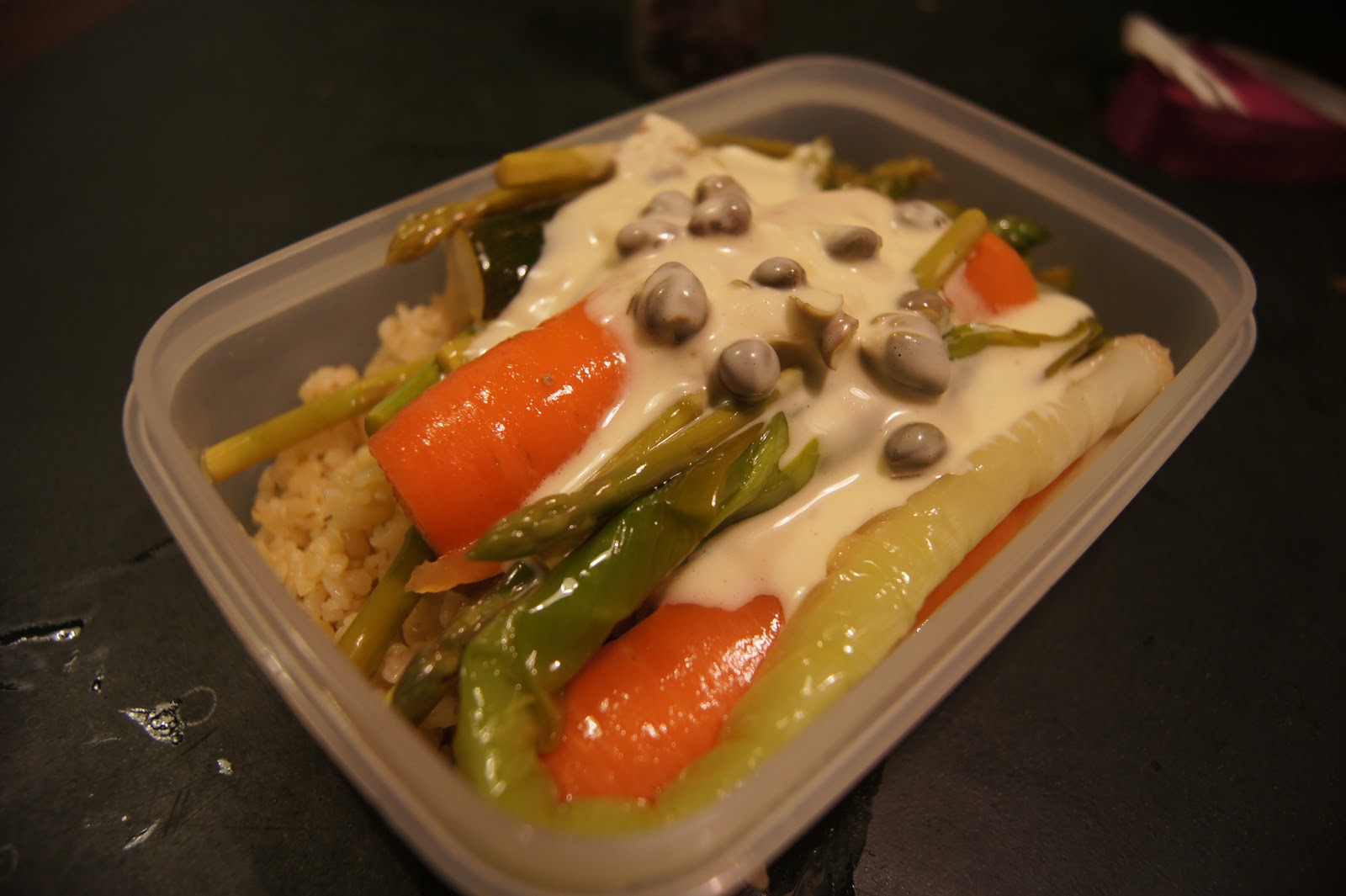
Poached baby vegetables with caper mayonnaise


Apologies crew but I broke my arm and have been out of action for a week or so. Straight back to the thick of it, though, with another Ottolenghi from Plenty. I'll say straight up that this one isn't as good as some of the other crackers, but it might be worth a look if this kind of thing tickles your fancy. Check the original recipe.

  • baby vetables - fennel, carrot, leek, asparagus etc
  • one egg, vegetable and olive oil, lemon, white wine vinegar, Dijon mustard for the mayonnaise
  • white wine, olive oil and bay leaves for the poaching liquor

Baby vegetables are something that may well set you back a bit normally. I was lucky to get a load of them cheap from Ridley Road and I supplemented them with a few adult vegetables in the form of carrots and courgettes.


First up make your mayonnaise. Use your normal method: I'm a self-confessed failure in this area, for some reason mine is often thin and fails to coagulate. The key here is for it to be very lemony and to chuck some capers in at the end. Regardless of the overall success of the dish the mayo is amazing, and should be used in other circumstance.

Next fix up your veg - Otto suggests poaching them in a mixture of white wine and olive oil. This is a nice idea but kind of wasteful. All the oil he calls for also makes things greasy when combined with the oil of the veg. I think some stock with lemon and bay and gestures of oil and wine is ok. Poach until done but with a slight crunch.


Serve with your preferred starch - grain/potato/bread with the veg, a dollop of mayo and a little ladle of stock. This responds well to some black pepper.
 
that's lunch sorted

A slight faff this one. It doesn't quite have the attractive simplicity of some other Ottolenghi dishes, what with the poaching and mayonnaising processes. It is, though, rather pretty, and might be a nice dinner party dish for an elegant starter. As I said, the lemon tinged mayo is a wonder and would be sublime with a lump of fish or some courgette burgers.

21 November 2011

Chickpeas with saltfish, tomatoes, garlic and kale

Assemblages. They are the business. Not quite salads, stews or anything else, assemblages are the pragmatists' favourite - a type of mixed dish which can take everything from fridge skulking vegetables to the finest of treat produce. With something filling and carbohydrate based in the mix they constitute an entire, discrete meal. Beautiful.


This cracking dish is from a small River Cafe fish book and centres around three central earthy ingredients: saltfish, chickpeas and kale.

  • saltfish
  • chickpeas
  • kale
  • tomatoes
  • garlic, dried chilli, olive oil

The night before you cook put the chickpeas in a bowl of boiling water. They are so central to this dish that it's worth the bother of soaking your own. When the cooking has started in earnest put the chickpeas on to boil - they'll need about forty minutes. Put your saltfish through three boils of cold water and see how salty it is. It may need one more.


Chop loads of garlic and and slowly cook in plenty of olive oil with a handful of sweet cherry tomatoes. After ten minutes add the chilli to taste. When the saltfish is satisfactorily de-desalinated push the tomatoes to one side of the pan and briefly fry the fish in the flavoured oil. Meantime, cook your kale down in some water until tender; ready your chickpeas. Combine everything in something big and add a splash of sherry vinegar and another of olive oil. I also chucked in some nice, sharp rocket. Lashings of pepper also advisable.


A wonderful mix. In turn resistant and giving - taste sweet and salt, iron and pepper. One might easily make it vegetarian compatible by using some nice grilled halloumi instead of the fish. On a similar tip the St John cookbook has an assemblage of tomatoes, boiled potatoes, roast garlic, roast tomatoes, saltfish, chopped boiled egg and parsley which is also amazing and probably next on my list as I bought three packs of saltfish for a fiver.

enjoy

11 November 2011

Aubergine and bread salad +


This was one of those spur of the moments meal. I'd been down to Ridley Road and picked up a bag of baby aubergines for £1. (Yes: one pound for about fifteen or so hand length aubergines). Also four packets of beautiful baby plum tomatoes for a pound and a load of dirt cheap fennel. Crazy.

So I got back and pottered about with the back of my brain wondering what to cook for lunch: Szechuan aubergines, curry, some sort of soup... How about just sticking the aubergines and tomatoes on to roast and then chucking together a salad? Ok, let's give it a go.

  • baby aubergine
  • cherry tomatoes
  • fennel or some other raw veg
  • flatbread
  • feta or salad cheese
  • yoghurt, garlic, pomegranite molasses, lemon juice, olive oil and sherry vinegar

 Roast the aubergines and tomatos with olive oil for thirty minutes or so


Meantime: chop the fennel or other raw salad veg. I advise going for something with a little crunch here to contrast with the soft and silken vegetables. Roughly chop or mash your cheese (I used a cheap, mild Turkish salad cheese which was 1/4 the price of feta).

When the veg is half done in the oven put in your flat-bread (I used wholemeal pittas to nice effect). The aim is crisp them up and put them in the salad fattoush style. When they are getting semi-crisp take them out and chop roughly. Add to the veg and cheese. Dress with a bit of olive oil and stir. The bread will start to absorb the essence of the vegetables, especially via the liquid insides of the tomatoes.


Mix the yoghurt dressing - 80% yoghurt, 7% water, 7% olive oil, 4% pomegranate molasses and 2% sherry vinegar. Add one clove of garlic chopped very fine and some salt and coarse black pepper.


Layer up the salad base with the bread, put on top the roast veg and then dress liberally.


some preserved lemons would also work here with the cheese and bread

Very nice, though I say so myself, and substantial enough for a complete lunch. The roast vegetables are still warm, rich and comforting, the fennel faintly regal and stand-offish, the bread the doughty workhorse of the piece. A nice balance.

27 October 2011

SD, ON's back in the pot pork (hui guo rou)

This is a delightfully rough-and-ready stir fry with a prominent black bean flavour suggested in Fuchsia Dunlop's Hunanese cookbook. It's best to use pork on the bone in some form - I used some pork chops and they worked admirably.


Best also to avoid parsimony with the beans here. I am sometimes over cautious in my allotting as they looks so potent but use a generous hand. The overall vibe is robust and farm-housey: whole cloves of garlic, big slices of ginger and the salty black beans.

  • pork on the bone for two or three
  • a small handful of back beans, a thumb of ginger and a head of garlic
  • a couple of handfuls of some type of greens and/or spring onions
  • soy sauce, sesame oil
  • a couple of fresh chillies


Simmer the pork for a few minutes in some water (the first stage of cooking - it being 'returned to the pot' when stir fried). Remove and slice. This is the traditional Chinese method of removing impurities from the meat and partly cooking it before stir frying. I'm still on the fence with it to be honest but open to suggestions.

Peel the garlic cloves and slice the ginger thinly. Fry them both on a medium heat in some oil for a few minutes. Add the meat and cook until it has some colour.


Add the black beans, fresh chillies, greens and a few slugs of soy sauce and a little sesame oil. I used some super pokey home-grown rocket here which worked well. I also added some celery and pepper to turn it into a complete meal. Use anything you have to hand - FD presents the recipe as something a Hunanese mate of hers cooked for her and I guess it's a home-style dish unbound by the dogma of restaurant process or official recipe. Cook everything for another couple of minutes and it's done.


Very pleasing. It's not a very moist dish so it might be nice in future to have alongside some steamed aubergine or similar.

21 October 2011

Pasta with roast cauliflower and pumpkin


Cheap cauliflower is a boon. It's one of those vegetables (like aubergines) that isn't often had for bargains on markets. When you see some cheap snap it up, take it home and roast it. I was prompted to roast mine by this post. I did it slightly differently, but the great thing is if you cook loads you can then have it in the fridge and ready to use in different things - a little side dish, the basis of a salad (would be great with chickpeas, turnips and preserved lemons) or, as here, with pasta.

  • cauliflower
  • pumpkin
  • garlic, chilli flakes, cinnamon, olive oil
  • pasta

Roast your cauli: in florets, with butter and salt. It will need half an hour - forty-five minutes on a medium heat.


Make the sauce: fry lots of garlic in olive oil and add the pumpkin chopped small with a little twig of cinnamon. Chuck in some chilli flakes. Put a little water in there and add a lid. Allow this all to cook down for ten or fifteen minutes, using your spoon to mash the pumpkin into a sauce. You don't need loads here - it's designed to lubricate the pasta and augment the cauliflower. If your pumpkin is anaemic and lacking taste, as mine was - from our communal garden, sprinkle a little veg stock on.


When the pumpkin is well cooked and the sauce has come together de-engage the cinnamon and discard. It has done an important job here - a slight sweetness that boosts the pumpkin and bonds with the chilli. Stir into your pasta and toss in the cauliflower. Anoint with oil or bless with parmesan as you see fit.


Yes. Sheer niceness. Where the cauliflower browns against the metal of the tray you are rewarded with a wonderful sweetness, whilst the roasting in general gives the vegetable a savour not attained through boiling or steaming. It gains an almost truffle like richness which combines with the pumpkin to make a wonderful sauce.


22 July 2011

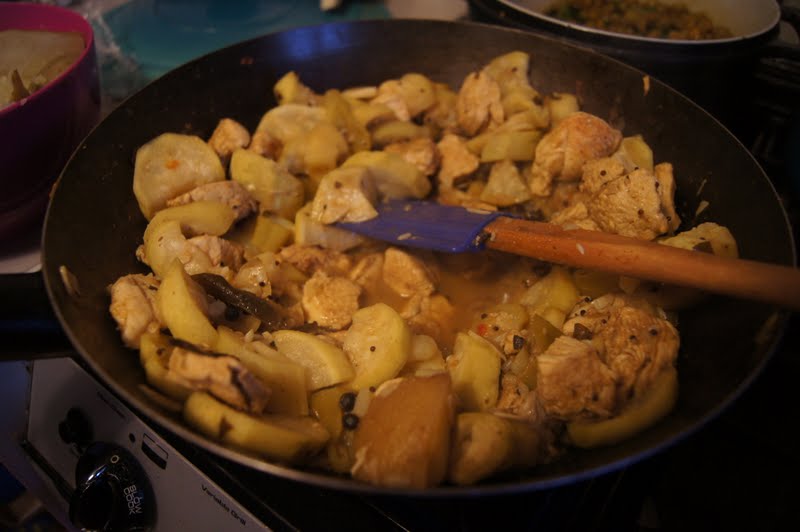
Chicken vindaloo

lauki, a type of calabash

OK we all know vindaloo is not just some ridiculous curry for pissed people that's hot as hell but not as interesting right? It's a child of Portuguese and Indian parents, like kedgeree a legacy of colonial expansion and consequent culinary syncretism. It's the vinegar that does it. I'm not much of a whizz with Indian food so I got Madhur Jaffrey's Curry Easy as a starting point and modified the recipe in it called 'chicken with vindaloo spices'. I think lots of vindaloos have a serious marinade, whereas this was perhaps more of a weeknight approximation. It was delicious - the vinegar gives a slightly sour, savoury note that goes very well with spices and garlic.


I put in some lauki which is very nice - slightly like the courgette which it resembles but with a crunchier texture post-cooking. Very absorbent for taking up the spices.

  • chicken
  • vegetables
  • garlic
  • vinegar (I used Turkish apple vinegar and it was fine)
  • brown mustard seeds, plenty of black peppercorns, curry leaves

Heat some oil and, giving each ingredient a minute to fry with a gentle stir add the mustard seeds, then black peppercorns, then curry leaves, then chicken, then loads of garlic, a decent amount of white wine or cider vinegar, a pinch of salt, some ground cumin and coriander and some chilli powder or flakes for heat. Cook for twenty minutes and should be done!


We had with rice and some green lentils boiled with turmeric and finished with green chilli and cumin seeds fried in ghee.

24 March 2011

Spicy braised fish with whole garlic (da suan shao yu)

cold, dead eyes

Just when you thought those spicy Szechuan sauces couldn't get any better... Whole garlic cloves - genius. This dish consists of a thick spicy sauce featuring all the usual suspects – chilli bean paste, ginger, spring-onions and dark soy – but this time with whole garlic cloves as well. An initial softening stage is required to partially cook the garlic and a ten minute spell of peeling is also needed. FD suggest cooking the fish in with the sauce but I think to keep things really simple next time I’ll just fry the fish separately. That way it’s easy to control the speed and rate at which the fish cooks, crisp up the skin and prevent it disintegrating the sauce.

  • dense, meaty fish (I used more Billingsgate mackerel from the freezer)
  • chilli bean paste, ginger, lots of garlic, dark soy, a smidgeon of sugar, stock/water
  • spring-onions


Firstly prepare the garlic: peel a bulb of the stuff per person or more if feeling foolhardy. Fry on a medium heat for five to seven minutes with a stir every forty-five seconds. The skin should crinkle lightly but not darken in colour too much. The cloves should be moderately soft. Remove.

Next, make the sauce: fry a few tablespoons of chilli bean paste in oil for thirty seconds and then add quite a lot of chopped ginger. Give this another minute or so – by now relentless heady waves of loveliness should be rolling off the pot and you should feel reassured and gladdened by the scent of frying chilli. Add a little splurt of dark soy and then top up with stock (or boiling water and pinch on stock powder) and reintroduce the garlic. You need enough liquid to make plenty of sauce: probably about 240 mills per person. Bring to a light boil to finish cooking the garlic.

Meantime fry the fish (after slashing the body) with a little oil in any way you feel comfortable. A nice crisp skin will be provide admirable textural juxtaposition to the garlic nodules and spicy sauce.

When the garlic seems pretty cooked introduce a little thickener (corn flour, potato flour etc) mixed with a dash of water to add gloss and thickness to the sauce. Add some chopped spring-onion at the last minute – FD suggests using the greens only (which is the authentic thing to do) but what’s a man to do with a load of half eaten spring-onions in his salad drawer? It all goes into my pot and I give them a minute or two on the heat to break the rawness of the white parts. (I forgot to add them this time which is why they are casually sprinkled on top.)
should have put the fish and sauce on top of the noodles really

Dish up the fish and pour the sauce over it. We had cabbage (the cannonball-heavy compact white type) fried with whole dried chilli, Szechuan pepper, chopped pickled chilli and dressed with Chinkiang vinegar.

Another delight then: quick, easy and tasty as you like. I've run out of things to say about Szechuan food really. It's just seems so perfectly balanced: numbing, hot, sour, sweet, vinegary. It's flexible and good at accommodating errant or forgotten vegetables and odd bits of fish from the back of the freezer. It's relentlessly tasty and pretty spicy which is surely a major plus in the minds of right-thinking people everywhere. Perhaps I better just say I really like it. Hopefully I'm helping convince you that you may too.

17 November 2010

Five onion soup

There's something about onions. They are the kind of food you can't believe anyone could anything but love. Onions, milder and sweeter leeks and shallots and garlic - all essential ingredients for anyone concerned with maximising taste in the kitchen. More than anything I like the cheapness and humbleness of the alliums.


Lindsey Bareham's A Celebration of Soup has something called five onion soup - onions, shallots, garlic, leeks and spring onions if you were wondering. How can that be resisted in this fickle and treacherous cold weather?

Ingredients
    • two leeks
    • two onions
    • five shallots
    • five cloves of garlic
    • five spring onions
    • one potato
    • cream
    • stock
    • herbs

It's a pretty straightforward soup recipe really. Cook the veg gently in butter starting with the most robust (onions) and adding the others to the mix as the sweating proceeds. They need about half an hour with a few dry herbs and a diced potato in the pot.


The stock is then added and the whole thing blitzed and simmered for twenty minutes to become itself. Add cream, correct the seasoning (lots of black pepper always seems so right with cream) and eat with croutons. Lindsey Bareham suggests making a chive cream but I couldn't be bothered.


Here's how I had some - with additional fried kale, chestnut mushrooms and chorizo on top to have with toast for a full meal.

16 September 2010

Ottolenghi's cauliflower with tahini


Quick, easy and cheap salad that would be nice with pitta and bulgar/feta salad for a whole meal. Check the recipe.


I didn't have yoghurt for the dressing so used a little olive oil instead to thin the tahini and it worked fine. To this I added lime instead of the specified lemon, plus chopped garlic, parsley and salt and pepper. The dressing is fairly forgiving and I did it by eye. The key is to get something sweet and nutty but citrusy from the molasses, tahini and lemon/lime respectively. You then just chuck the fried cauli and sections of spring onion in with the dressing and give it a taste. I put a small amount of raw spring onions in too for texture.


Yum!