Showing posts with label soup. Show all posts

18 May 2012

Garlic soup

This recipe was brought to my attention by a friend who cooked it for dinner once. It's a version of garlic soup which uses both roast and raw garlic cooked in the soup mix to create a distinct but far from overpowering flavour, which is then enriched by parmesan and cream.


You are going to need -
  • 26 garlic cloves (unpeeled)
  • some olive oil
  • two small sliced onions
  • a teaspoons chopped fresh thyme
  • 18 garlic cloves, peeled
  • four cups of chicken or veg stock
  • some single cream
  • finely grated parmesan
  • plenty of lemon

Roast the unpeeled garlic for around 40 minutes. Fry the onions with the thyme for 15 minutes with some olive oil.

Add the raw garlic, the roast garlic (sans jackets naturally) and the stock and cook for half an hour. When everything seems ready blitz the mixture, remove from the heat and add a little cream. Serve with a grating of parmesan and a squeeze of lemon.

I'm not sure this recipe needs as much cream as the original blog suggests. It does make a wonderfully tasty and rich soup, a perfect starter in fact, but with a little less you could have a larger bowl of it which, with some bread, would make a good lunch.

The lemon really lifts the taste and should not be missed. I wonder if perhaps it's possible to skip the roasting stage of the garlic to simplify the recipe and make things quicker? Either way, it's delicious.


12 April 2012

Lemony aubergine soup


Cooking aubergines on a gas top is one of those thing you can't believe you've never done before. It's well easy, and a great way to cook them that avoid using a load of oil. You stick them over a naked gas flame, rotate occasionally and after about fifteen minutes you've some beautifully soft and giving aubergines ready for baba ganoush, or in this case soup. This Ottolenghi recipe (from his first book) is extremely simple. All you need is:

  • plenty of aubergine
  • some cream
  • some stock
  • lots of lemon
  • a bit of basil
Cook half your aubos as I have described. When soft allow to cool and peel off their skins. Chop roughly.


Meantime, fry the other half of your aubergines, cubed, in some olive oil. When they are soft combine all the aubergines and top up with some stock. Cook this for thirty minutes. When it seems done season, squeeze loads of lemon juice in, top off with a lick of cream (off the boil so it doesn't curdle) and chuck on a few basil leaves.


Very easy. Also very tasty, though the soup has a delicate appeal that wasn't immediately evident. It was consumed alongside the green pancakes of wonder, and such was our delight in them that the soup was over-shadowed. However, once reassessed after a few more spoons it was judged positively. It's quite light and simple - there is just the one vegetable in it - but the mix of smoke from the grill, sharpness from the lemon and richness from the cream was just the ticket with a bit of toasted pitta.

4 October 2011

Dal 5 - corn and dal soup

There is an interesting looking recipe in Madhur Jaffrey's Easy Curry for a fairly thin dal with slices of intact corn cob. You cook the corn in-the-piece with the husk presumably enriching the dal itself and the corn a plump treat needing a quick finger grapple or fork stab.


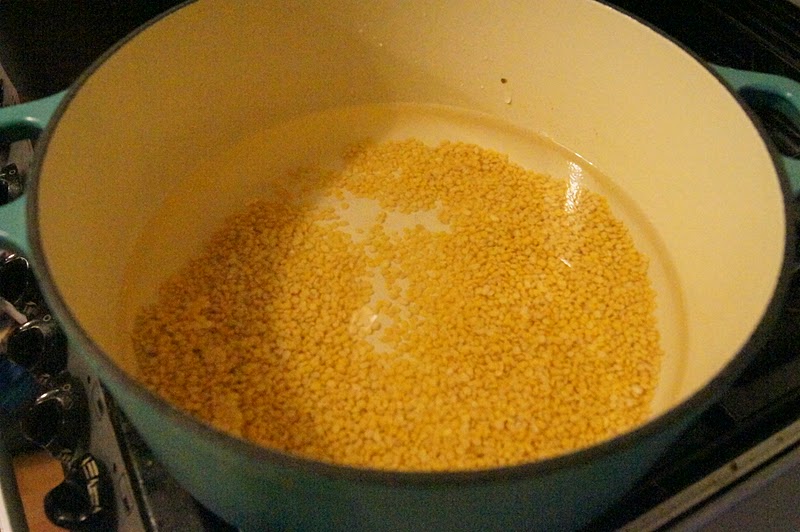
I used yellow lentils for this. It's all very simple and fairly familiar probably.
  • corn
  • lentils
  • onion
  • nice ripe tomato or other veg
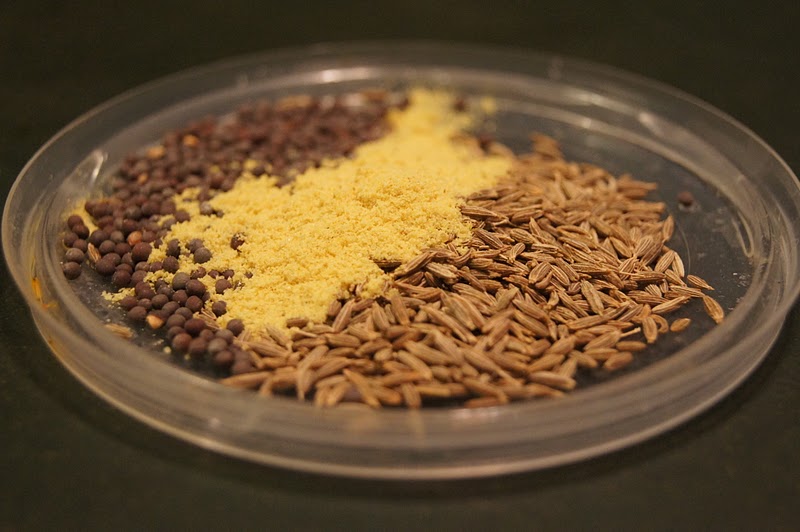
  • mustard seed, asfoetida, cumin (use these three in ratio 3:3:1), turmeric
  • dried red chilli and/or fresh chilli to your liking


Boil your lentils in water with turmeric. Skim off the scum that comes out of them (why do nice wholesome lentils yield scum, I thought this was mainly grotty lamb neck and other tendon, bone and cartilage heavy meat products?). This is well worth doing by the way - my eyes often glaze over when reading recipe steps like this which seem vaguely optional, but they really do give up a strange and not very enticing scum that's better out the pot.

When the lentils are partly cooked add the slices of corn and top up with water to a soup consistency. After five minutes add a few roughly chopped tomato.


Meantime fry your onion in ghee for ten minutes. Then add all the spices and the chilli and fry until the mustard seeds start to pop. This will be around a minute with the onion sharing the heat - a matter a seconds in a naked pan. When the corn is nearly done put in the onion mixture - the onions should be really soft.

Cook for another five minutes and then adjust seasoning/flavours if needed with a little salt, pepper or ghee. Sprinkle on some veg stock if the flavour is thin.


And there you have it. I like doing this type of soups if people come over - it's all in one pot and with some Indian bread and some pickles it's a whole easy meal. If you fancy the proper dal version just use less water - it's equally tasty.

19 September 2011

Torn bread & lamb soup (yang rou pao mo - 羊肉泡饃)

As with the recent pork tacos, my interest is often piqued by recipes on blogs. Having had a bash at Xinjiang's signature dish Da Pan Ji I thought this soup on the excellent Sunflower Food Galore blog looked like another good idea in terms of that area's cuisine. However, upon reading more closely I realised it is from Xian and not Xinjiang. A totally different part of the country. What fooled me was the lamb and flat-bread, usually associated with the bit of China bordering the central Asian states. I need to investigate fully. 

Anyhow, it appealed. An aromatic lamb stock + torn bread  + some extras is a great combination that recalls other classic bread using soups such as ribollita. Why waste stale bread when you can make it in to wicked soup?


wood-ears and lilly buds

So, I won't repeat the recipe as it's in the original link. First you need to make the stock. I used lamb scrag for cheapness and savour. The stock is flavoured with the staples of Chinese broths - cooking wine, ginger, spring-onions, fennel seeds, star anise, cassia and false (or Chinese) cardamom (chao guo). It's a similar mix to that which flavoured my sour fish soup and partridge congee. It'll need a good 2 hours +. Remove the bones, pick them over and reserve the meat.

The stock may look rather disagreeable whilst bubbling away, coloured as it is by weird scum from the lamb bones. Once it is strained (muslin is pretty much essential here I'm afraid) it becomes much more attractive.


before

 during

 after

Next you need to get everything ready to add to the stock. For my sins I went for pittas over the home-made bread option. Wood ears (which resemble human skin quite creepily) and lily buds need a soak. Lilly buds were new on me (available at the super, and ever dependable Yu Xiao in Dalston) and have a nice, mild flavour and pleasing, giving texture.


Chop you bread into bits and chop some spring onion and garlic. When the stock is ready add the bread, chopped wood ear, spring onion, a little garlic and the lily buds. Flavour the stock with some light soy sauce, cooking wine and Chinkiang vinegar. When the garlic has lost some rawness add the last parts - the lamb pieces, coriander, chilli oil and seasame oil to taste. Serve.


This soup has a lot going on for it. The bread is amazing, slowly moving from crisp, through pliable and limp into mushy territory. All enjoyable states for soup based bread I think. The scrag meat is incredible tender and flavoursome. However, I'm not sure I quite nailed the stock. It was nice but not exactly bursting with flavour so I think next time I'll cook the bones for longer and maybe at a slightly higher temperature.

18 August 2011

Cabbage, pasta, parmesan and chickpea soup


Like parsimonious Italian grannies, in my flat we've been saving the rinds of spent blocks of partisan for a moment such as this. Now they come to the fore and truly become themselves. Soup. To be specific, a kind of minestrone x pasta e fagioli bastard, miscegenation born of necessity. The cabbage, pasta, parmesan and chickpeas are the backbone of this dish - feel free to experiment with the other ingredients but I think these four should remain as the central pillars around which the flavour is woven. If you have some white wine to hand why not add a small glass to the pot?

  • an onions and some garlic
  • one cabbage
  • one tin chickpeas (or other beans)
  • parmesan
  • vegetable stock
  • pasta
  • olive oil
  • dried chilli
  • fresh basil (not crucial)


Chop your onions and garlic and cook in olive oil. Give them ten minutes or so to get properly translucent and nice. Add the parmesan rinds and some dried chilli.


Introduce stock, a shredded cabbage and a tin of chickpeas. A couple of minutes later put in some pasta (don't go mad with the amounts - it should compliment and not dominate the rest of the ingredients). Cook for ten to fifteen minutes and make sure everything is cooked. Now is not an al dente time. Season, add more olive oil if needed and stir in some grated parmesan. Add some basil at the end if you have some, it's not a big deal if you don't


This soup is a great example of a combination which exalts its humble components beyond the store-cupboard. The chickpeas and pasta give it main-meal heft, the cabbage gives you vegetable goodness and the parmesan, chilli and garlic keep things interesting. You could posh it up a bit bit that qualifies as gilding the lilly in my book.


7 March 2011

Fish soup with pickled greens (suan cai yu)


All this fun with chilli-bean paste had to end some time. It's regular and welcome appearance in my fridge, pan and mouth was making me forget the amazing Szechuan food that existed without the wondrous paste. It was time for a go at something else.

This soup with pickled mustard greens and fish looked just the ticket as I had some super fresh mackerel from a trip to Billingsgate in the freezer. I thought an oily and meaty fish would stand up well for itself in a hot and sour soup filled with pickled vegetables.

wonderful pickled mustard greens


Here is a recipe modified from FD.

  • one mackerel per person
  • one pack pickled mustard greens (300g)
  • 1l+ stock
  • pickled chillies (if you have no Szechuan ones use Turkish)
  • Shaoxing wine, ginger, garlic
  • bunch spring onions

Firstly fillet the fish and pour a little salt and Shaoxing wine over the fillets.


Next you need a stock. If you have any fish stock to hand use (or maybe a light chicken one, just?), otherwise make a quick stock with the spines and heads of the fish, some appropriate spices and a pinch of veg stock. I boiled the bones (after smashing open the heads) with Szechuan pepper, a couple of dried chillies, fennel seeds, star anise, false cardamom and a scant handful of dried oyster and porcini mushrooms for some depth. I also added a small amount of Gentleman's Relish, containing as it does mainly anchovy and salt, this is a good short-cut when bolstering a fish stockStrain the stock well - lots of small black particles will have exited the fish heads and entered the liquid. My Le Creuset was a warlock's crock-pot of grey sediment and unidentifiable bits of mackerel matter by this point: muslin recommended.


false cardamom - amomum subulatum

Fry the garlic, chilli and pickled chillies, all cut fine. The yellow-green Turkish chillies that you get with kebabs worked great as they are a bit sour and suitably tangfastic. I asked Fuchsia Dunlop on her blog about the right pickled chillies to use and she was kind enough to reply. The ones in my previous post are a hot mountain chilli. What is needed here is the milder, sour ones - hence me using the Turkish option. I don't know what the authentic version of this soup tastes like and I don't think it matters hugely, but this substitution hits the right notes in my opinion.


Add the strained stock and mustard greens (cut ragged). Add the chopped spring onions. Bring everything to a simmer and leave for five minutes to bring things to a head.

Gently introduce the fish pieces and poach for a few minutes until cooked. FD suggests thickening but I loved the soup thin and broth-like. She also offers an option for chilli lovers of pouring on a layer of hot oil and Szechuan pepper. Now normally I'd be all over that, but the beauty, to me, of this soup lies in its soothing qualities. It is a balm, a tonic, and the pickled chillies give a gentle and suggestive heat that needs no augmentation. I saw somewhere the taste of the false cardamom described as 'antiseptic'. That's apt - initially I was worried by its strident flavour but the menthol notes of the pod assimilated well and added to the overall taste pretty well. You end up with a soothing savoury broth, the sourness of the pickled vegetables, some welcome squeak from the mustard greens and then the dense mackerel, surprisingly delicate in its liquid matrix. It tastes downright healthy this soup in fact.

note the beautiful, miso-like, fine particle cloud of the soup

I suggest eating this with a bowl of brown rice at your elbow.

10 January 2011

Pasta e fagioli

Fiending for a cheap and cheery soup fix I trawled my Google reader archives and found this excellent looking recipe for Pasta e fagioli. As a peasant dish I think the ingredients are fairly flexible and I was happily able to make something from the stuff in my cupboard and fridge. Out went the bolotti beans and in came the chickpeas. Some beautiful tiny tomatoes went in instead of a whole tin and a crumbled dried chilli or two subbed for the fresh one. Also a drop of cream left over from the pheasants. What’s good here is that if you include a decent amount of pasta it becomes a meal in itself. The gentle crushing of the veg releases enough starch to thicken the liquid which raises wholesomeness and satisfaction levels.


The ingredients can be found in the link. I added some extra parmesan at the end and only roughly followed the recipe but can confirm it a good one. Thanks rachel eats!

17 November 2010

Five onion soup

There's something about onions. They are the kind of food you can't believe anyone could anything but love. Onions, milder and sweeter leeks and shallots and garlic - all essential ingredients for anyone concerned with maximising taste in the kitchen. More than anything I like the cheapness and humbleness of the alliums.


Lindsey Bareham's A Celebration of Soup has something called five onion soup - onions, shallots, garlic, leeks and spring onions if you were wondering. How can that be resisted in this fickle and treacherous cold weather?

Ingredients
    • two leeks
    • two onions
    • five shallots
    • five cloves of garlic
    • five spring onions
    • one potato
    • cream
    • stock
    • herbs

It's a pretty straightforward soup recipe really. Cook the veg gently in butter starting with the most robust (onions) and adding the others to the mix as the sweating proceeds. They need about half an hour with a few dry herbs and a diced potato in the pot.


The stock is then added and the whole thing blitzed and simmered for twenty minutes to become itself. Add cream, correct the seasoning (lots of black pepper always seems so right with cream) and eat with croutons. Lindsey Bareham suggests making a chive cream but I couldn't be bothered.


Here's how I had some - with additional fried kale, chestnut mushrooms and chorizo on top to have with toast for a full meal.

1 November 2010

Ribollita and pesto

Man, I can't stop cooking from Plenty! I can't remember the last cookbook from which I not only wanted  in a vague sense to cook but actually did get around to making this many recipes. This time it's his take on ribollita, proper peasant fare, with some pesto. There must be 1,001 recipies for this.


Onion and vegetables go into the pot to soften in olive oil. The herbs are then added and everything cooked gently for a short while.


Five minutes before serving chickpeas go into the soup. Meanwhile into the magimix go basil, parmesan, olive oil, salt and pepper for the pesto. No nuts around but that's not a problem I feel.


Ottolenghi suggests baking the bread until crisp and then putting into the soup which seems a bit silly to me - why go to the trouble of drying it out to put it in a load of liquid? So instead I fry some long chunks of Turkish bread in olive oil and butter. Everyone gets one on top of their soup.


Delightful stuff - heartening-healthy rather than worthy-healthy in taste. I like the inclusion of fennel here but in truth you could put almost anything in the soup.

21 October 2010

Curry lamb soup

With the leftovers of last week's curry goat I made a cold-weather soup so steadying and satisfying that it had to be recreated from scratch as soon as possible. It was a classic case of the humble successor dish being tastier and more enjoyable than the grander original upon whose remnants it is based. I thought I would go for lamb scrag this time as I have found it so good before under conditions of long cooking.

At Turkish Food Centre in Dalston, though, they had middle neck lamb for half its normal price. The middle neck is cut into chops, fattier by far than normal chops, but with the same bone up the side and an oval yellow cross-section at the bottom (spinal cord?).


Crazy cheap! Over 800g of lamb for just over three quid. I also purchased some dried peppers from TFC because they looked nice and I  felt they might be good for enriching stews.


Ingredients
    • lamb with plenty of bone
    • two onions
    • garlic, scotch bonnet, thyme
    • handful of lentils, barley or can kidney beans
    • carrots
    • tin tomatoes
    • curry paste

Following a similar recipe to the curry goat I sweated two onions with curry paste, chucked in some additional spices (scotch bonnet kept whole, couple cloves, some whole peppercorns) and a tin of tomatoes. I also added the dried peppers here so they had plenty of time to soften up and topped up the mix with boiling water. The aim is to cook down enough so the onions and tomatoes start to disappear and the soup is an oily red-brown.


After twenty minutes the lamb was added (brown if you fancy - I'm still on the fence) and four or five carrots cut large tipped in also. After fourty-five minutes a handful of green lentils were added and the soup simmered for another thirty minutes or so. Taste, correct seasoning and when it tastes ready then it is!


What I was looking to recreate here was the success of last week - a thick soup whose meatiness came not from big chunks of floating flesh but the deeply savoury stock. Think of the profound beefiness of the best pho as the cornerstone, augmented by a sweet richness of tomato, long-cooked carrot and meat fat and the heat of the chilli. I don't know if the extra day or two in the fridge for the ingredients of that previous dish meant the flavours had got to know each other more and had in fact become extremely comfortable in one-other's presence, but this attempt at recreation did not quite capture the savour and success of it, tasty though it was.

28 September 2010

Storecupboard soup with preserved lemon


It is incredibly satisfying using up little odds and ends of food and turning them into something enjoyable. With a few greens in the fridge needing to be used up and a smattering or substances from the store cupboard I made a quick and tasty soup.

Ingredients
    • big handful of greens
    • handful of lentils/pasta/barley/chickpeas
    • a piece of bread
    • onion
    • garlic, dried chilli flakes, cumin, olive oil, tomato puree
    • preserved lemon

Firstly I fried some onion and spring onion in a big glug of olive oil. I then added concentrated tomato puree, garlic, cumin, dried Turkish chilli flakes and a crumbled slice of bread. This needs to fry for five minutes.


Then boiling water was added, a handful or something starchy (I added a mixture of green lentils, orange lentils and the delicious rice-shaped Orzo pasta) and a stock cube (no shame at all in a stock cube for a week day meal in my experience - I used chicken) and the mixture allowed to cook for ten minutes. Greens then need to go in (I had kale and cabbage but use anything) and ten more minutes simmering allowed for the all the ingredients to get to know each other and relax. I added a few scraps of leftover lamb here. Add some preserved lemon after rinsing. Correct the seasoning and serve. I think black pepper is important here, ideally in large pieces approximately a third the size of the peppercorn itself.


Lovely. The kale is refreshed by immersion to a mineral green. The soup base is sour, salt and spice. The bread, lentils and pasta mix at the bottom of the bowl and catch the chunks of pepper. The olive oil and traces of lamb fat float on the top of the soup deliciously and the occasional pieces of lamb are welcome indeed. I enjoyed this more than yesterday's roast really. It must be the parsimony of the north in me...

26 September 2010

Quick tea of vegetables and bread


Quick tea before heading out. Asparagus with bread crumbs and broad-beans. This was just a handful of ciabatta breadcrumbs from the freezer (great way to save stale bread from the bin) fried with thyme and chilli flakes and tipped over some white asparagus and broad-beans done in a griddle.


Then a soup of roast tomatoes and peppers. Roast them in a 50/50 ratio with some garlic and olive oil, blitz and top up with water to a good consistency. Add a pinch of stock and salt and pepper and that's it! Couldn't be easier. Eat with more bread.


14 September 2010

Lamb soup with preserved lemons

The idea for this soup comes from the second Moro book where they do a steamed lamb dish. This is a soup version of this with lamb neck (scrag). It's super cheap and tasty. It's well quick to prepare, though needs a couple of hours on the hob.


The prep time is very low and you can forgo browning the meat for ease (I'm still on the fence about the value of browning, Harold (McGee) says that the idea of sealing the juices in is nonsense but it does get the wicked Malliard reaction started and the roast meat flavour going on, still are you gonna notice that in a big stew or soup, I don't know...ho hum. If I do brown meat I reckon putting on in a non stick frying pan on a high heat so it gets really brown is the one, I'm not sure a gentle browning serves much purpose, answers on a postcard.) Lamb neck is such a great ingredient - it made me realise it's the lamb version of oxtail (and half the price). It's rich in collagen and gelatine, the bone gives amazing flavour for stocks and sauces and the meat can be shredded and put back into the dish.


I'd really recommend preserving your own lemons. I did mine from the same Moro book and they taste amazing. They need to sit in the salt solution for around three months but are just so good and much cheaper than buying them - they taste like a grown-up lemon sherbet, all salt and savour.


Garlic, cumin and chilli fried in olive oil really sum up the taste of Turkish soups and stews to me and are a great base from which you can just add anything, eg chickpeas and spinach and bread and have something good to eat.

Ingreds

    • 1 scrag end of lamb cut into large chunks (mine was just over three quid in Turkish shop)
    • preserved lemons
    • two big potatoes / a tin of chickpeas / a handful of barley
    • parsley or coriander (I know they don't taste that similar but both would be fine here)
    • 2 onions
    • garlic
    • cumin
    • dried chilli
    • olive oil

  1. Fry the onions in olive oil for five minutes.
  2. Add four garlic cloves chopped roughly, one tablespoon of cumin and one of chilli flakes (Turkish shops good for this) and one large or two small preserved lemons rinsed and chopped. Fry for another five minutes.
  3. Trim any excess fat from the lamb and pull out the spinal cord sections if you fancy. Brown if you can be bothered.
  4. Add to the pan with the veg and fry for a couple of minutes before adding a litre or so of boiling water. Cook on lowest heat for one hour and a quarterish.
  5. Check out the meat and if really soft take out and take meat off bone.
  6. Add the potato, chickpeas or barley. The chickpeas will only take a minute to warm up but the other things longer natch so simmer accordingly.
  7. Add the meat back to the soup and check seasoning - add salt (shouldn't need much as lemons are pretty salty), plenty of pepper and a bit more lemon or juice from the lemons if need be (the lemon should provide an amazing background tang that cuts through the richness of the lamb fat). Add the herbs - I like lots of flat leaf parsley here.


There you go, it's rich and meaty as you would expect, comforting flavours for the colder weather. You could put anything in really - tomatoes towards the end, courgette, more chilli etc.If there is some left and you stick it in the fridge you can skim off the fat from the top when cool if you're interested in that sort of thing.


Source: Moro and me. Verdict: tasty.

PS Blog still a bit rubbish probably but hold tight I'm working on it. :)