Showing posts with label Middle Eastern. Show all posts

31 January 2012

Baked eggs with sage and chilli butter


OK baked eggs are a classic through loads of the world - from a Pakistani spiced version with tomatoes to the Turkish classic menemen, a chickpeas and feta based iteration and the North African staple shakshouka (also popular in Israel apparently, courtesy of the Tunisian Jews). You could easily do a nice UK themed one with leeks and bacon. This, wonder of wonders, is Ottolenghi's version with sage and chilli with a sauce whose taste and savour far exceeds the sum of its parts. It's flippin amazing.

You can peep the original recipe here but the basics are:

  • two eggs each
  • greens - rocket, spinach, tender leeks
  • yoghurt mix (with a little raw garlic)
  • butter mix (with chilli flakes and sage)

Pre-heat the oven to a medium heat.

Sweat down your greens in a pan until they are soft. Add them to an oven dish and crack the eggs between the vegetal bolsters. Stick in the oven.


Mix your yoghurt with a little crushed raw garlic. Make the spiced butter - melt in a pan with the sage and chilli flakes and let it cook for a minute or two so the butter solids start to brown slightly and move towards a state of hazelnut aroma, and the sage crisps.


When the eggs are looking done remove and plate up. I found it tricky getting to a point where the yolks were still liquid but the white was set. You may have more luck.

Combinate however you like with the yoghurt and a generous portion of the spiced butter and serve with absorbent Turkish bread.


Oh my days, sheer brunch based heaven. Don't hold back on the butter, it just doesn't make sense to do so. This should be served with some nice coffee (hazelnut?) and some fruit juice. One might even accessorise with some additional greens to balance the various fats and round out the meal. Whatever happens you are in for a treat. (The spiced butter would be great tipped over a fried egg sandwich if you can't be bothered to go the whole hog).

9 January 2012

Lentil and parsnip salad

This salad or assemblage is a rather nice combination of flavours which put me a bit in mind of an Ottolenghi recipe (well, perhaps a simplified one). Nothing too fancy, and lots of big, hearty flavours which come together nicely under a robust dressing.


  • stuff for a strong dressing: olive oil, sherry vinegar, lemon juice, a touch of raw garlic
  • parsnips
  • puy lentils
  • chilli flakes and mint
  • cherry tomatoes, other nice salad veg

First things first: chop the parsnips, dress with olive oil, dust with chilli flakes, season and roast on a medium heat for about half an hour. You want them to be very well done - the beauty of the parsnip lies in its sweetness and the sugar can not be well appreciated in an underdone root. Meantime put the lentils on and cook until al dente.


Whilst the main bits are cooking make the dressing directly in a big serving bowl. This saves on messing around with a smaller jar or other vessel. I have suggested ingredients above but anything robust is good. Steer towards a middle eastern vibe with sherry vinegar, pomegranate molasses, preserved lemons etc. rather than a French style, mustard based vinaigrette.

When the parsnips and lentils are done to your liking chuck into the bowl and finish the salad with some nice raw salad veg and herbs. I went for cherry tomatoes and mint. Also nice would be something crunchy like raw fennel, white cabbage or celery or something green and irony like blanched spinach or cavolo nero. Taste and finish off by adding salt, pepper, chilli flakes or any other dressing ingredients as you see fit.


This would be a lovely side dish to have with some grilled chicken, lamb or fish. It's pretty filling with the lentils in. At most you might need a scrap of Turkish bread - excellent with a smoky lamb kebabs and some good red wine I'd imagine. As it happened we had a vegetarian friendly version with a fried egg of top. Let me know if you try it!


11 November 2011

Aubergine and bread salad +


This was one of those spur of the moments meal. I'd been down to Ridley Road and picked up a bag of baby aubergines for £1. (Yes: one pound for about fifteen or so hand length aubergines). Also four packets of beautiful baby plum tomatoes for a pound and a load of dirt cheap fennel. Crazy.

So I got back and pottered about with the back of my brain wondering what to cook for lunch: Szechuan aubergines, curry, some sort of soup... How about just sticking the aubergines and tomatoes on to roast and then chucking together a salad? Ok, let's give it a go.

  • baby aubergine
  • cherry tomatoes
  • fennel or some other raw veg
  • flatbread
  • feta or salad cheese
  • yoghurt, garlic, pomegranite molasses, lemon juice, olive oil and sherry vinegar

 Roast the aubergines and tomatos with olive oil for thirty minutes or so


Meantime: chop the fennel or other raw salad veg. I advise going for something with a little crunch here to contrast with the soft and silken vegetables. Roughly chop or mash your cheese (I used a cheap, mild Turkish salad cheese which was 1/4 the price of feta).

When the veg is half done in the oven put in your flat-bread (I used wholemeal pittas to nice effect). The aim is crisp them up and put them in the salad fattoush style. When they are getting semi-crisp take them out and chop roughly. Add to the veg and cheese. Dress with a bit of olive oil and stir. The bread will start to absorb the essence of the vegetables, especially via the liquid insides of the tomatoes.


Mix the yoghurt dressing - 80% yoghurt, 7% water, 7% olive oil, 4% pomegranate molasses and 2% sherry vinegar. Add one clove of garlic chopped very fine and some salt and coarse black pepper.


Layer up the salad base with the bread, put on top the roast veg and then dress liberally.


some preserved lemons would also work here with the cheese and bread

Very nice, though I say so myself, and substantial enough for a complete lunch. The roast vegetables are still warm, rich and comforting, the fennel faintly regal and stand-offish, the bread the doughty workhorse of the piece. A nice balance.

2 November 2011

Sea bream with spiced couscous


I've just been to Hastings. As well as checking Bexhill's excellent De La Warr Pavilion I was kindly gifted three fish (two bream, one bass) by someone big in the sea-fishing game with a big freezer and a kind heart. I took them home frozen: stiff and leaden and kept cool on the sluggish journey back to Liverpool St. with frozen bottles of water. With one bream and one bass somehow stuffed into the freezer for future use I left a bream out to cook the following day.

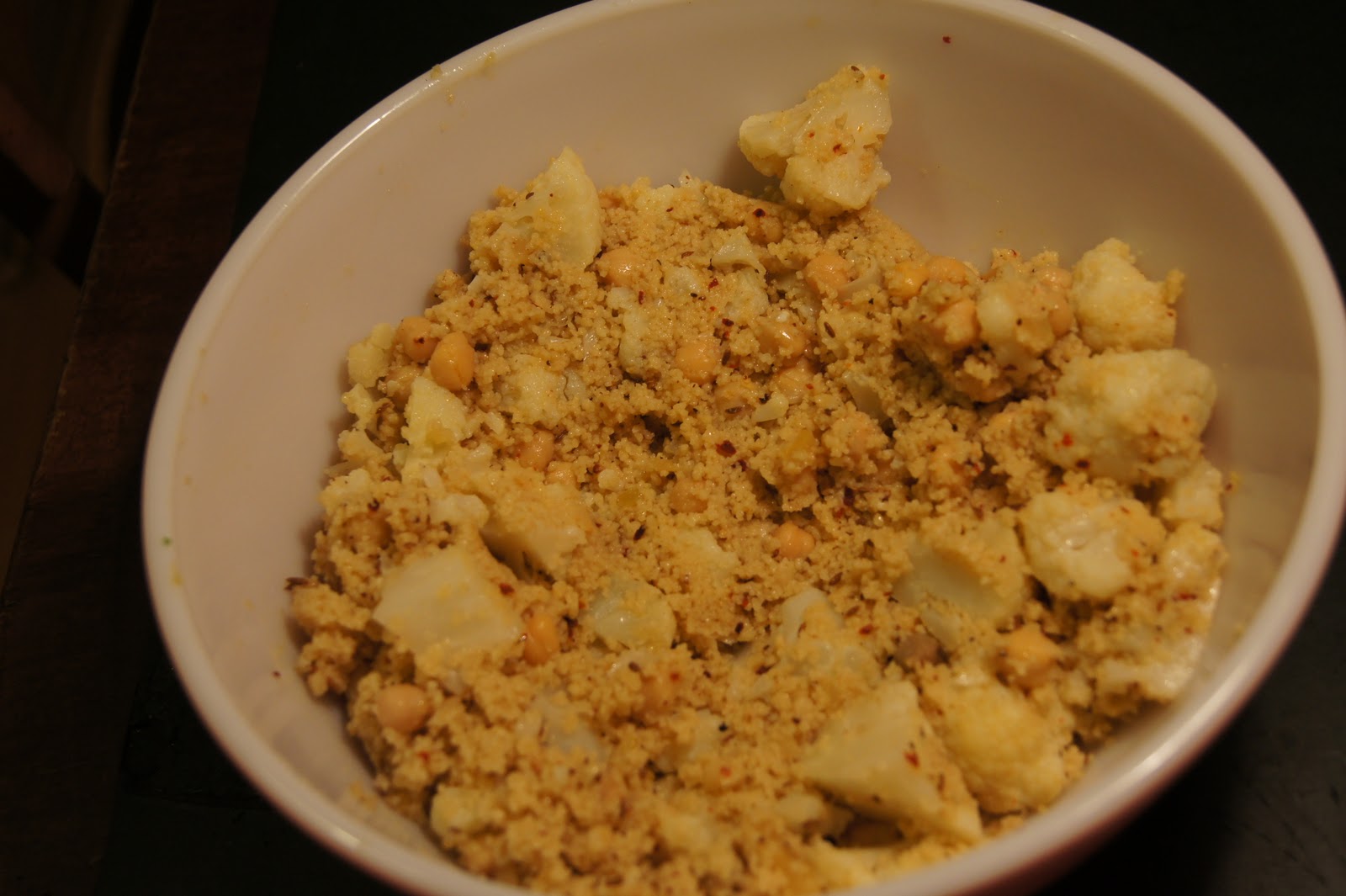
I'd been instructed to cook the sea bream simply and after reading about it's geographical spread and presence in the Mediterranean as well as the South of England I opted for something vaguely Middle Eastern and fairly faff-less to go with it. Couscous mixed with preserved lemons, chickpeas and cauliflower, flavoured with cumin and dried chilli and dressed with olive oil and sherry vinegar.


  • sea bream or similar
  • couscous
  • can of chickpeas
  • cauliflower
  • olive oil, sherry vinegar
  • preserved lemons, cumin, dried chilli

    Put your cauliflower florets in boiling water until cooked (but still with a good crunch). Rehydrate your couscous. Chop some preserved lemons. Toast some whole cumin and chilli flakes (can't recommend Turkish kirmizi biber highly enough in this department). Open a can of chickpeas and rinse them. Combine everything in a bowl and stir. Perk with oil and vinegar. Sorted.


    Chickpeas in couscous are wicked! Such a great switch-up texture wise. I'd recommend heartily. The other ingredients are your standard middle eastern-ish flavours and gel nicely. This mix is best served warm but not hot.

    Grill your fish (with a sprinkle of salt and a little lick of olive oil) and serve with the couscous.


    Delicious! Sea bream is quite a meaty fish - a nice white dense meat with an appealingly moderate flavour. I think grilling it is a good choice which allows the fish itself to be foregrounded and focussed upon. I might try roasting its twin or frying it in steaks, as the one thing grilling leads to is a lack of crispy bits.

    Thanks for the fish Shaun.

    17 October 2011

    Chickpea and pumpkin with creamed feta


    You know those brown chickpeas with their skins still on that you get in curries sometimes? Get involved. They're well nice. They need to be soaked overnight in boiling water and will then cook in about half an hour. No need to mess around with bicarb of soda or anything. Just a minute's prep the night before and then thirty minutes on the hob while you get everything else ready. I still have canned chickpeas in the cupboard for impromptu salads etc. but the texture of these dark chickpeas makes them well worth a go if you have time to plan. They seem hard and under-cooked in their jackets but when bitten into are delightfully earthy - initially resistant but ultimately giving.

    This is one of those simple assemblages that makes a lot of sense on an inclement mid-week evening.

    • lots of chick peas
    • a third - a half that amount in pumpkin/squash
    • a third that amount of onions
    • a few nice ripe tomatoes
    • a block of feta
    • preserved lemons
    • olive oil, cumin, chilli flakes, garlic

    Soak your chickpeas over night. Put them on to boil on a moderate heat. After twenty minutes check their progress and add chunks of pumpkin/squash.

    Chop lots of garlic and fry in plenty of olive oil with cumin and chilli. This is my Turkish holy trinity of flavours which you can use all over the shop to flavour soups, salads and stews. Add the onions in slices and cook these down on a medium heat. They are a key ingredient here, not just background mulch, so make sure they are good and soft.


    Meantime mash and thin the feta with a little olive oil and a drop of cream (or water if you have none to hand) in a bowl. Add plenty of black pepper and some rinsed preserved lemon sliced thinly. Mash until you have a thick paste - this is the taste bomb necessary to perk the mash beneath it - salt, sheep, adult/child lemon sherbet. Herbs such as thyme and rosemary would also work well.

    When the chickpeas are done put them in with the onions and a a few ripe chopped tomatoes. Cook this all for five minutes to relax it and so the tomatoes break down to make a sauce. No need for salt as the feta will supply this. Serve with a dollop of creamed feta on top and some red wine or Turkish beer.

    13 May 2011

    Kuru fasulye


    Sometimes I see a recipe posted on a blog and immediately know that I want to cook and eat it. The simple looking stewed beans on the super Eating Asia was one such dish. Beans long cooked with tomato and pepper, sweet and rich with butter and lamb fat. A modest warmth from some dried chilli. Clearly this is an amazing combination of tastes.

    So off to Turkish Food Centre I went. First problem is that TFC is so well stocked, so good a shop in fact, that they had three rather than the expected one type of dried white bean. I cast my mind back to the post and tried to remember the shape of them. Butter bean size? No, maybe too big, something a little smaller. In the end I went for dermason fasulye which looked about right. I left on the shelf butter beans, something called Argentinian bean and a few other things. I had a guess at what would go into a hearty rendition of the dish rather than digging out a recipe.

    • fatty lamb on the bone
    • two cups of dried white beans
    • a couple of red peppers cut small
    • a couple of onions cut small
    • a head of garlic
    • chilli flakes
    • a can of tomatoes
    • butter

    Fry the onions in some butter for ten minutes with two big pinches of chilli (the mild, tasty Turkish kirmizi biber is well worth tracking down).

    Add the lamb, dried beans and tomatoes, top up with water and boil for an hour and a half. Fatty and bony lamb is the best for giving the dish a good overall lamb flavour. I used scrag from the freezer left over from congee Mk. 2.


    Add the peeled garlic cloves (keep them whole to save effort – they will dissolve in the liquid) and cook for another hour. Prod the meat and encourage the removal of any meat, whilst leaving the bones in the mix for flavour.

    Add the chopped pepper. Assess the situation. Are the beans cooked? They should be creamy inside with a uniform give when bitten. There should be none of the sudden shifts in texture that pockets of under-cooked bean can bring. Cook until the pepper is soft and the beans are as desired. Is this dish gummy, oily and comforting? If it isn’t add some butter, olive oil or lamb tail fat.

    Season.


    Serve with rice, bulgar or Turkish bread, a fried or boiled egg if you want more protein and some pickles.


    Do not cook this if you are in a rush. These modest little beans took an age to cook. I didn’t get the sauce quite as intense as I wished. I’m going to try again. Maybe I can get some rendered lamb tail fat from TFC. Their dried bean selection is a sight to behold – surely they can melt down a few tails in a back-room somewhere?


    After googling the beans it seems they are white kidney beans. However in the finished dish they looked very much like baked beans - which are haricot. So I'm not sure.

    26 January 2011

    Sweet and sour poached leeks

    This is a very nice side dish from the second Moro book.


    I think the real key here is the make sure you use young and tender leeks. I used some bargain but borderline superannuated ones from Ridley Rd and their outer layer turned out to be extremely chewy. They were edible but after a going over the soft inner bit disappeared and just the stringy outer bit left with its gentle throttle on the way down.

    The key to the poaching liquor is the sweetness from the sugar and the sourness from the lemons - I used chopped preserved lemons here and it worked well. Their salt-sour taste made the liquid extra jazzy. The books suggests using other green vegetables you may have to hand - peas, broad beans, cabbage or artichoke.

    Ingredients
    • leeks, young and slim
    • sugar, water, garlic and lemon


      Old school

        Fry a few chopped garlic cloves in olive oil lightly and then added the trimmed and cleaned leeks. Add a couple of hundred mills of water, a tablespoon of sugar and either the juice of a lemon or some chopped preserved lemon. Poach until done - around fifteen or twenty minutes. Get some young ones and save the big woody leeks for the soup pot.


        With grain salad again

        I made this a week or so ago and, lo, what appeared on Ridley Rd this week but packs of tiny leeks!, snaffled naturally. In a bizarre reversal of the laws governing vegetable behaviour the leeks looks like small spring-onions whilst the actual spring-onions have gone rogue: giant, tough and whip like, barely fitting in the fridge. The little ones worked a treat with this dish.

        12 January 2011

        Yoghurt pie and grain salad

        What I like about Ottolenghi is that he suggests things I’d never make myself without prompting in a million years. Anyone can dream up a few salads or roast veg tarts and the like, but mixing yoghurt with chopped herbs and nuts, thickening it with flour and baking it is a combo that would not have cropped up in my head any time soon. Obviously I have inherent cultural bias and all the rest but just saying...


        As ever the ingredients were tinkered with as I’m mean and don’t like buying things when other things I have can do the job. Check the official recipe.


        The nature of the beast is this: fry some onion or shallot, toast a few nuts, chop lots of herbs and mix with rich (‘Greek’) yoghurt to form a thick paste. Season. Thicken this with flour and encase with vine-leaves slathered in melted butter and olive oil in an oven-proof dish. Sprinkle with breadcrumbs and bake for forty minutes.


        Pine nuts can be a bit dear and I found the walnuts I had worked fine. I also used normal flour instead of rice with no obvious adverse effects.


        I’ve gotta say I was initially wobbling on the fence a bit with this one – not outright horrid or anything you understand but not a straight-off head nodding success. But having some of it later and cooler after a trip to the pictures it started to make more sense. Rather than a hot pie this is much nicer as a room temperature slice of contrasting but complimentary flavours and textures – the leathery, briney vine leaves, the modest crunch of nut and crumb, the herbs in their giving yoghurt matrix, the butter sheen of fat that coats the thing. In fact, looking back at the recipe Otto specifies leaving it for ten minutes to cool – something I totally missed - eek!


        If I made this again I’d serve it more as a mezze component and add garlic to the onion/shallot stage.

        We had the pie with roast toms and grain salad – all you do is chuck in small amounts of every grain in the cupboard according to cooking time and then flavour when cool. We had puy lentils, rice, bulgar and orzo pasta with chopped preserved lemons and olive oil. Delicious.

        28 September 2010

        Storecupboard soup with preserved lemon


        It is incredibly satisfying using up little odds and ends of food and turning them into something enjoyable. With a few greens in the fridge needing to be used up and a smattering or substances from the store cupboard I made a quick and tasty soup.

        Ingredients
          • big handful of greens
          • handful of lentils/pasta/barley/chickpeas
          • a piece of bread
          • onion
          • garlic, dried chilli flakes, cumin, olive oil, tomato puree
          • preserved lemon

        Firstly I fried some onion and spring onion in a big glug of olive oil. I then added concentrated tomato puree, garlic, cumin, dried Turkish chilli flakes and a crumbled slice of bread. This needs to fry for five minutes.


        Then boiling water was added, a handful or something starchy (I added a mixture of green lentils, orange lentils and the delicious rice-shaped Orzo pasta) and a stock cube (no shame at all in a stock cube for a week day meal in my experience - I used chicken) and the mixture allowed to cook for ten minutes. Greens then need to go in (I had kale and cabbage but use anything) and ten more minutes simmering allowed for the all the ingredients to get to know each other and relax. I added a few scraps of leftover lamb here. Add some preserved lemon after rinsing. Correct the seasoning and serve. I think black pepper is important here, ideally in large pieces approximately a third the size of the peppercorn itself.


        Lovely. The kale is refreshed by immersion to a mineral green. The soup base is sour, salt and spice. The bread, lentils and pasta mix at the bottom of the bowl and catch the chunks of pepper. The olive oil and traces of lamb fat float on the top of the soup deliciously and the occasional pieces of lamb are welcome indeed. I enjoyed this more than yesterday's roast really. It must be the parsimony of the north in me...

        16 September 2010

        Ottolenghi's cauliflower with tahini


        Quick, easy and cheap salad that would be nice with pitta and bulgar/feta salad for a whole meal. Check the recipe.


        I didn't have yoghurt for the dressing so used a little olive oil instead to thin the tahini and it worked fine. To this I added lime instead of the specified lemon, plus chopped garlic, parsley and salt and pepper. The dressing is fairly forgiving and I did it by eye. The key is to get something sweet and nutty but citrusy from the molasses, tahini and lemon/lime respectively. You then just chuck the fried cauli and sections of spring onion in with the dressing and give it a taste. I put a small amount of raw spring onions in too for texture.


        Yum!

        14 September 2010

        Lamb soup with preserved lemons

        The idea for this soup comes from the second Moro book where they do a steamed lamb dish. This is a soup version of this with lamb neck (scrag). It's super cheap and tasty. It's well quick to prepare, though needs a couple of hours on the hob.


        The prep time is very low and you can forgo browning the meat for ease (I'm still on the fence about the value of browning, Harold (McGee) says that the idea of sealing the juices in is nonsense but it does get the wicked Malliard reaction started and the roast meat flavour going on, still are you gonna notice that in a big stew or soup, I don't know...ho hum. If I do brown meat I reckon putting on in a non stick frying pan on a high heat so it gets really brown is the one, I'm not sure a gentle browning serves much purpose, answers on a postcard.) Lamb neck is such a great ingredient - it made me realise it's the lamb version of oxtail (and half the price). It's rich in collagen and gelatine, the bone gives amazing flavour for stocks and sauces and the meat can be shredded and put back into the dish.


        I'd really recommend preserving your own lemons. I did mine from the same Moro book and they taste amazing. They need to sit in the salt solution for around three months but are just so good and much cheaper than buying them - they taste like a grown-up lemon sherbet, all salt and savour.


        Garlic, cumin and chilli fried in olive oil really sum up the taste of Turkish soups and stews to me and are a great base from which you can just add anything, eg chickpeas and spinach and bread and have something good to eat.

        Ingreds

          • 1 scrag end of lamb cut into large chunks (mine was just over three quid in Turkish shop)
          • preserved lemons
          • two big potatoes / a tin of chickpeas / a handful of barley
          • parsley or coriander (I know they don't taste that similar but both would be fine here)
          • 2 onions
          • garlic
          • cumin
          • dried chilli
          • olive oil

        1. Fry the onions in olive oil for five minutes.
        2. Add four garlic cloves chopped roughly, one tablespoon of cumin and one of chilli flakes (Turkish shops good for this) and one large or two small preserved lemons rinsed and chopped. Fry for another five minutes.
        3. Trim any excess fat from the lamb and pull out the spinal cord sections if you fancy. Brown if you can be bothered.
        4. Add to the pan with the veg and fry for a couple of minutes before adding a litre or so of boiling water. Cook on lowest heat for one hour and a quarterish.
        5. Check out the meat and if really soft take out and take meat off bone.
        6. Add the potato, chickpeas or barley. The chickpeas will only take a minute to warm up but the other things longer natch so simmer accordingly.
        7. Add the meat back to the soup and check seasoning - add salt (shouldn't need much as lemons are pretty salty), plenty of pepper and a bit more lemon or juice from the lemons if need be (the lemon should provide an amazing background tang that cuts through the richness of the lamb fat). Add the herbs - I like lots of flat leaf parsley here.


        There you go, it's rich and meaty as you would expect, comforting flavours for the colder weather. You could put anything in really - tomatoes towards the end, courgette, more chilli etc.If there is some left and you stick it in the fridge you can skim off the fat from the top when cool if you're interested in that sort of thing.


        Source: Moro and me. Verdict: tasty.

        PS Blog still a bit rubbish probably but hold tight I'm working on it. :)