Showing posts with label dal quest. Show all posts

4 October 2011

Dal 5 - corn and dal soup

There is an interesting looking recipe in Madhur Jaffrey's Easy Curry for a fairly thin dal with slices of intact corn cob. You cook the corn in-the-piece with the husk presumably enriching the dal itself and the corn a plump treat needing a quick finger grapple or fork stab.


I used yellow lentils for this. It's all very simple and fairly familiar probably.
  • corn
  • lentils
  • onion
  • nice ripe tomato or other veg
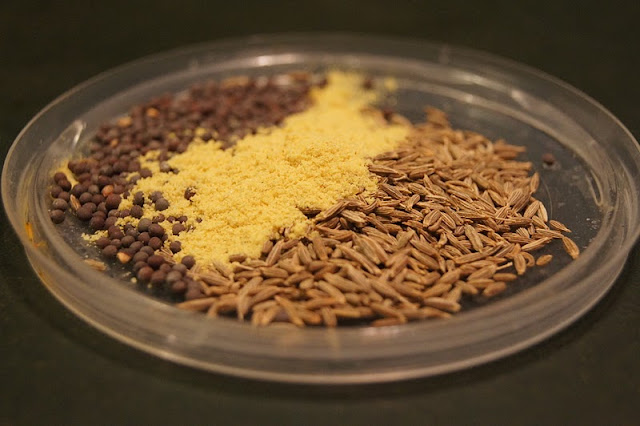
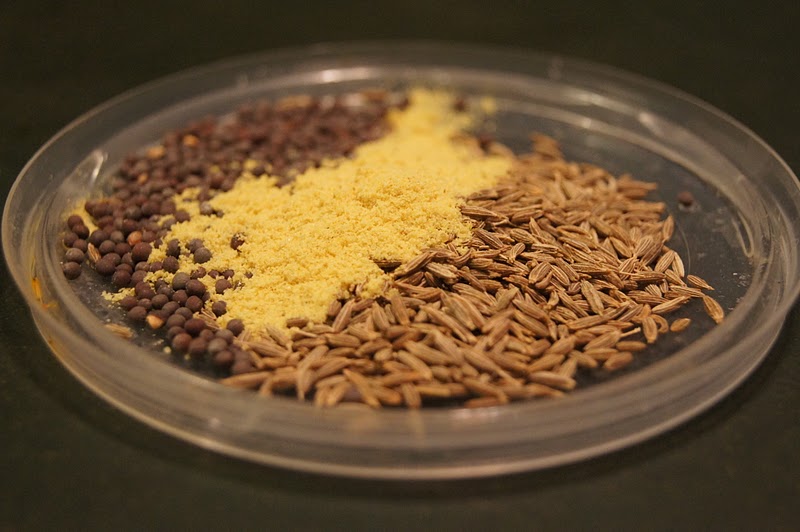
  • mustard seed, asfoetida, cumin (use these three in ratio 3:3:1), turmeric
  • dried red chilli and/or fresh chilli to your liking

Boil your lentils in water with turmeric. Skim off the scum that comes out of them (why do nice wholesome lentils yield scum, I thought this was mainly grotty lamb neck and other tendon, bone and cartilage heavy meat products?). This is well worth doing by the way - my eyes often glaze over when reading recipe steps like this which seem vaguely optional, but they really do give up a strange and not very enticing scum that's better out the pot.

When the lentils are partly cooked add the slices of corn and top up with water to a soup consistency. After five minutes add a few roughly chopped tomato.


Meantime fry your onion in ghee for ten minutes. Then add all the spices and the chilli and fry until the mustard seeds start to pop. This will be around a minute with the onion sharing the heat - a matter a seconds in a naked pan. When the corn is nearly done put in the onion mixture - the onions should be really soft.

Cook for another five minutes and then adjust seasoning/flavours if needed with a little salt, pepper or ghee. Sprinkle on some veg stock if the flavour is thin.


And there you have it. I like doing this type of soups if people come over - it's all in one pot and with some Indian bread and some pickles it's a whole easy meal. If you fancy the proper dal version just use less water - it's equally tasty.

22 July 2011

Chicken vindaloo

lauki, a type of calabash

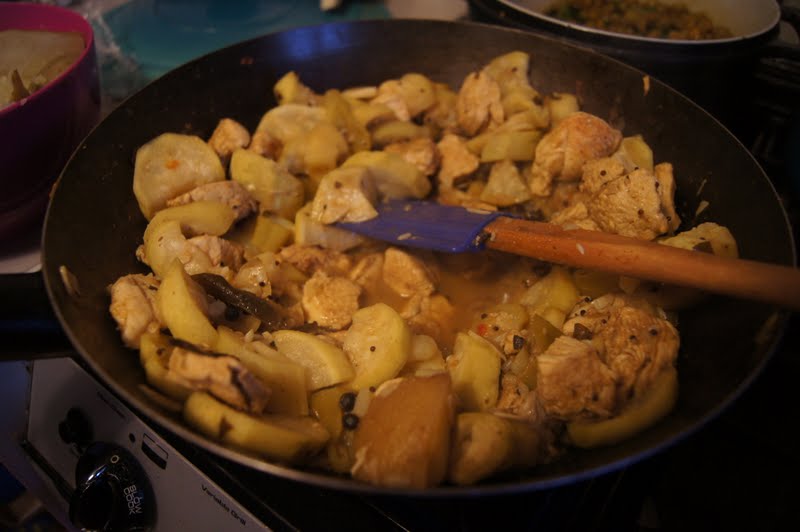
OK we all know vindaloo is not just some ridiculous curry for pissed people that's hot as hell but not as interesting right? It's a child of Portuguese and Indian parents, like kedgeree a legacy of colonial expansion and consequent culinary syncretism. It's the vinegar that does it. I'm not much of a whizz with Indian food so I got Madhur Jaffrey's Curry Easy as a starting point and modified the recipe in it called 'chicken with vindaloo spices'. I think lots of vindaloos have a serious marinade, whereas this was perhaps more of a weeknight approximation. It was delicious - the vinegar gives a slightly sour, savoury note that goes very well with spices and garlic.


I put in some lauki which is very nice - slightly like the courgette which it resembles but with a crunchier texture post-cooking. Very absorbent for taking up the spices.

  • chicken
  • vegetables
  • garlic
  • vinegar (I used Turkish apple vinegar and it was fine)
  • brown mustard seeds, plenty of black peppercorns, curry leaves

Heat some oil and, giving each ingredient a minute to fry with a gentle stir add the mustard seeds, then black peppercorns, then curry leaves, then chicken, then loads of garlic, a decent amount of white wine or cider vinegar, a pinch of salt, some ground cumin and coriander and some chilli powder or flakes for heat. Cook for twenty minutes and should be done!


We had with rice and some green lentils boiled with turmeric and finished with green chilli and cumin seeds fried in ghee.

11 June 2011

Dal 4 - mixed pulses in a soup


Dal quest continues. Coincidentally The Grauniad ran a similarly themed article - How to cook perfect dal.

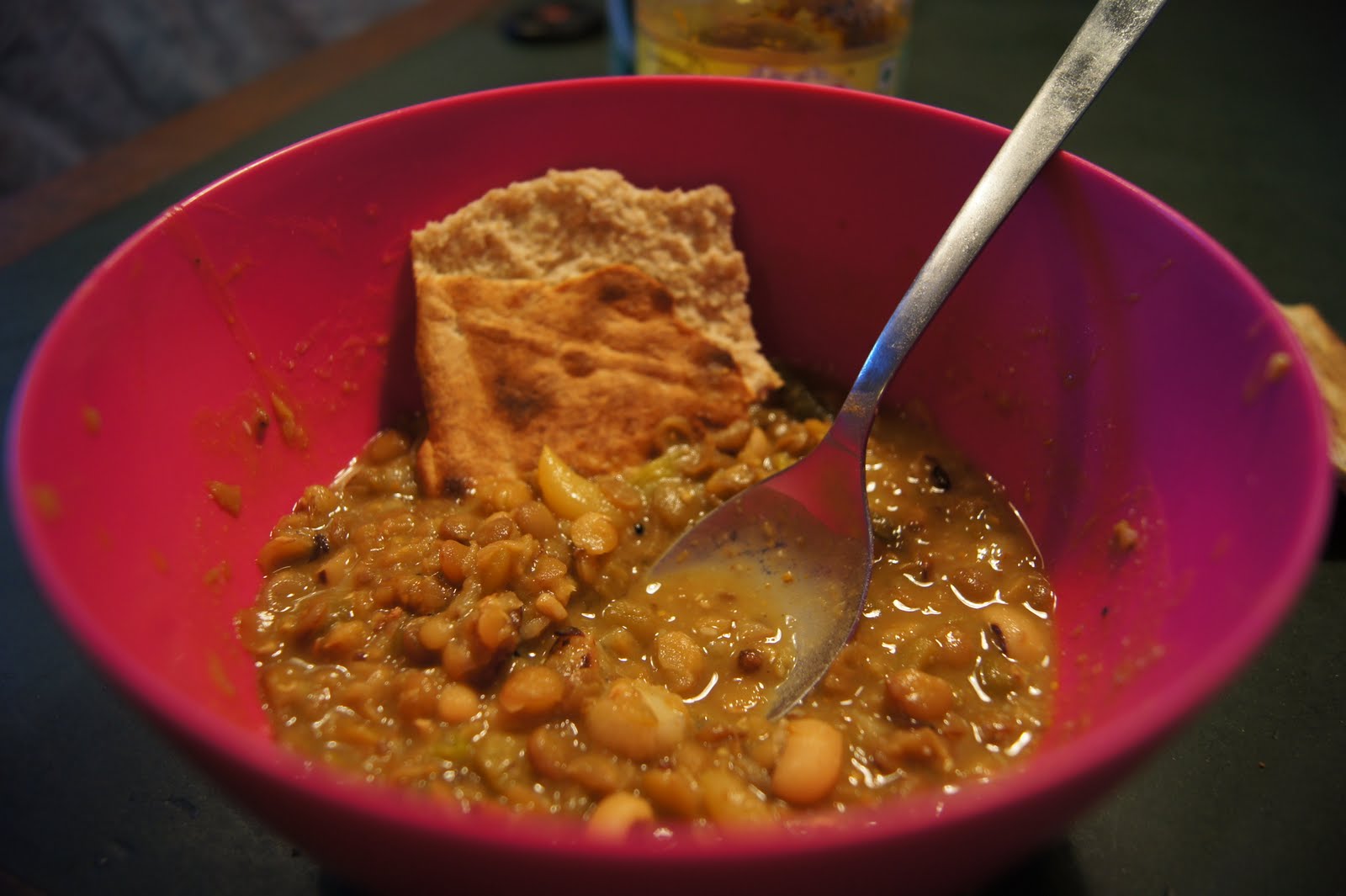
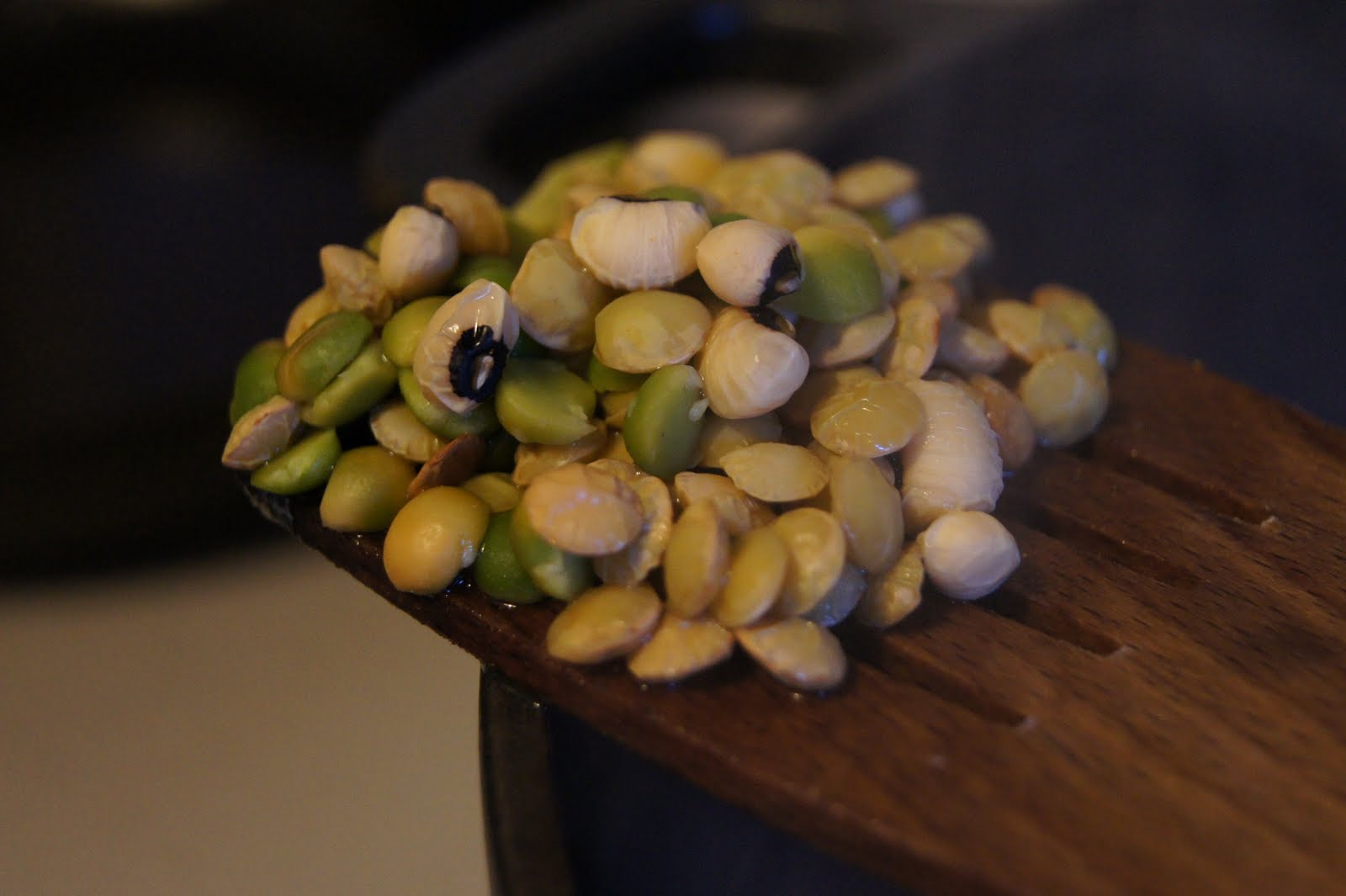
This attempt had mixed pulses - green lentils, green split peas, orange lentils and black-eyed beans. They all went in to boil at the same time in plenty of water bar the orange lentils which take less time to cook and consequently went in later. I also added a knob of tamarind to give some sour-sweet background.


Instead of the obligatory onions in this I used spring-onions as they were lying around. They are very cheap on Ridley Road at the minutes - four big bunches for a pound.


  • mix of dried lentils, beans and peas (whatever you have in your cupboard)
  • onions or spring onions
  • cumin, coriander seed, mustard seed, curry leaves, tamarind, garlic, green chillies
  • creamed coconut

Set the pulses to boil, taking into account how long each one will take and adding accordingly. Chuck in a know of tamarind and some turmeric and salt.

Make the spicy onion mix. Fry the onions in a generous amount of ghee and after ten minutes add chopped garlic and lots of green chillies. Keep them at a temperature high enough to almost burn the onion, which should give it a desirably rough and smoky tinge. Add the dried spices and fry for another ten minutes.


When the pulses are cooked combine with the spices and onion. Stir and cook for another five minutes. Add some water if needed to make a soupy mixture and shave in some creamed coconut at the end: enough to hint at but not fully deliver richness.


This one has a nice mix of flavour and made a good tea with some pitta and some pickles. Nothing too exotic.


9 May 2011

Dal 3 - red lentil

Red lentils start very red and end up yellow. True stories.


I'm working my way through all the legumes I can lay my hands on for Dal Quest. After that maybe I'll try combining them. For #3 I used red lentils which have one great advantage over some other dried pulses - they cook extremely quickly. Like twenty minutes and they are down to a pleasing gloop. No overnight soaking, no mega thinking ahead, just put them on to boil whilst attending to the temper and they might even beat the onions and spices in the other pan.

They did in this case as I wanted to caramelise the onions a bit in ghee to give a sweetness to the finished dish. I also wanted to try ginger for the first time in Dal Quest to see how it fared.


  • two onions
  • two cups of red lentil
  • two thumbs of chopped ginger
  • two green chillies
  • cumin, garam masala, turmeric, chilli powder, ghee

Boil the lentils (rinse the starch of them in a sieve first) with a pinch of stock and shakes of salt, turmeric and chilli powder.

Fry two medium onions chopped fine in ghee for ten minutes on a lowish heat with the ginger. They should start to gold and soften. Add cumin, chopped chilli, turmeric and continue to fry for another fifteen to twenty-five minutes. Add the garam masala and stir.

When the lentils are done strain any excess water off. When the onions look soft, limpid and wonderful introduce them to the lentils and lubricate with some more ghee.

in the dim light reminiscent of voided baby mush but trust me, mega delish

With a veg curry of turnip, spinach and okra, some rice and raita this made a pretty decent combo. In this version it's the lentils themselves that star. The spices and onion do enough to simply foreground the earthy lentil essence without dominating it. Lentils need friends to prevent them being boring: like us all they seem to become more themselves with a little support and attention.

5 May 2011

Dal 2 - chickpea and onion


And so onto chickpea, mightiest of legume. I've always advocated tinned chickpeas being the lazy man I am but dal quest is surely as good a time as any to have a go on the dried versions. This lot had a soak in boiling water overnight (well it started boiling, I'm sure the natural laws of thermodynamics meant that it cooled in that period) with a sprinkle of turmeric.
Lots of dal recipes suggest boiling the legumes until cooked and then adding a preparation or tempering of fried spices at the end (AKA chaunk (Hindi: छौंक), chhaunk, chounk, chonk, chhounk, chhonk, tarka, tadka, bagar, phoron, phoran in Bengali, vaghaar (Gujarati: વઘાર) and popu). So that is what I did. Sort of.

 please note silicon Le Creuset spatula, heat proof to a million million degrees

  • dried chickpeas
  • lots of onions (one per person)
  • curry leaves, turmeric, cumin, brown mustard seeds, garlic, green chillies

After soaking the chickpeas set them to boil in a covered pan. They are going to need about forty minutes.

Meantime fry the onion in a healthy dollop of ghee with a little sliced garlic. After twelve minutes push the onion to the side of the pan and allow some ghee to pool in the middle - add a little more if needs be. Put in a fair amount of cumin and allow to fry in the fat and surrender their oils.

Add the other spices in sensible amounts and the chilli and fry them for five minutes in the pan, stirring to prevent burning. Stir everything together and continue to cook under all golden and soft.

When the chickpeas are nearly done combine with the pan of onions and spices and cook together for five minutes or until done.


I guess this wasn't a proper tempering as you chuck that on right at the last minute and serve straight away. This was more of a two stage cooking process. I think it worked excellently. The chickpeas have their own time and space to concentrate on softening up and the spices all get to spend time together in a pan with the onions. The onion totally broke down and formed the most wonderful sweet and aromatic paste to hold the chickpeas. Don't scrimp on them: you need serious amounts here.

And what of the dried chickpeas, the great labour of love? Very fine. More characterful for sure. A soft interior like the canned version but with a more evident jacket, a tasty, textured exterior to welcome your every molar.

    26 April 2011

    Dal 1 - yellow split pea


    First of all: I've not been slacking. I've been on holiday. Within a few hours of returning to London we saw people fighting with knives in the afternoon at the top of Mare Street, Hackney Central. Young men running at each other in the road, one with a dog and one with a weapon in his hand.

    Still, the weather was great and Hackney in the sun is easily one of the best places in the world. If you haven't sat in the the lovely garden of St John at Hackney or visited the nearby Sutton House (a National Trust property no less) then I recommended checking them both out. St John has a very nice walled garden.   

    So, on to dal! Dal seems like a good idea most of the time. It's cheap, healthy if you go easy on the ghee, and most important of all, it tastes amazing. I'm going to cook dal till it tastes perfect. There are just so many recipes out there though - where's a man to start?  I decided to begin my quest by making a basic version using my modest knowledge of Indian cooking and then take it from there by researching other recipes. Here it is.


    • onions and a little garlic
    • cumin, coriander, turmeric, garam masala, green chilli,
    • yellow split peas
    • ghee

    Cumin and coriander are such a good combination that it seemed wise to start with them.

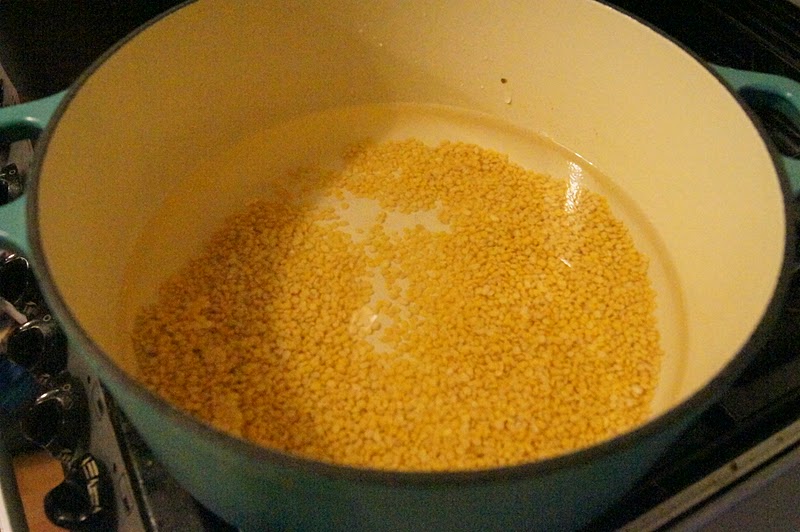
    Fry a couple of chopped small onions in three teaspoons of ghee for ten minutes with a little garlic. Add a teaspoon of coriander seed and three of cumin. Fry for another few minutes until you can smell them starting to give up their oils. Add two chopped green chillies (I keep a few in the freezer for times like this when you are cooking out the store-cupboard), a few shakes of turmeric and garam masala  and the yellow split peas (the amount in the jar above) and fry for a couple of minutes. I had originally thought these yellow discs were lentils but Wikipedia says otherwise. Wikipedia knows best.

    When it's all looking good add about a litre of water and three cardamom pods partly prised open. These things need more cooking than you might think - they are pappy at twenty minutes, edible at thirty but really come into their own nearer fifty.

    try with an islet of melting ghee on top

    Very nice. Once the tongue-burning period well known to any glutton unable to resist freshly cooked food had passed the flavours opened up nicely. An earthy and honest base of flavour from the peas and the onion (you shouldn't be able to feel much onion in your mouth, it's all about them dissolving) with a satisfying underlying heat and flashes of something a bit more racy when you approach cardamom wake. Don't be tempted to put too much fat in this dish: it's appeal lies in its restrained and earthy tastes.

    So, any winning dal recipes out there?