Showing posts with label Italian. Show all posts

13 December 2011

Spaghetti with cherry tomatoes, creme fraiche and bottarga

Bottarga's a bit of a funny one. Incredibly expensive (an entire dried roe in a Bologna Deli whose price I enquired was valued at over forty euroes), and strongly redolent of fish food in its little jar, it sits in the cupboard waiting for moments such as this. It's a luxury item like truffle oil that's best saved for an occasional treat. Used judiciously and simply (like truffle oil) it gives an extra kick to standard dishes. For this combination try and get hold of very sweet cherry tomatoes and cook them slowly to give a wonderful flavoursome sauce.

  • cherry tomatoes
  • olive oil
  • a few cloves of garlic, chilli flakes
  • bottarga
  • creme fraiche


    The key here is to give the tomatoes plenty of time - be generous with the olive oil and garlic and patient with the cooking time. They will break down and form a wonderful sauce. Add chilli flakes to taste.

    Serve with a dab of creme fraiche and a sprinkle of bottarga. These can then be mixed on the plate to make a beautifully rich but simple sauce.


    Some fine parmesan may or may not be gilding the lilly. You decide.

    21 November 2011

    Chickpeas with saltfish, tomatoes, garlic and kale

    Assemblages. They are the business. Not quite salads, stews or anything else, assemblages are the pragmatists' favourite - a type of mixed dish which can take everything from fridge skulking vegetables to the finest of treat produce. With something filling and carbohydrate based in the mix they constitute an entire, discrete meal. Beautiful.


    This cracking dish is from a small River Cafe fish book and centres around three central earthy ingredients: saltfish, chickpeas and kale.

    • saltfish
    • chickpeas
    • kale
    • tomatoes
    • garlic, dried chilli, olive oil

    The night before you cook put the chickpeas in a bowl of boiling water. They are so central to this dish that it's worth the bother of soaking your own. When the cooking has started in earnest put the chickpeas on to boil - they'll need about forty minutes. Put your saltfish through three boils of cold water and see how salty it is. It may need one more.


    Chop loads of garlic and and slowly cook in plenty of olive oil with a handful of sweet cherry tomatoes. After ten minutes add the chilli to taste. When the saltfish is satisfactorily de-desalinated push the tomatoes to one side of the pan and briefly fry the fish in the flavoured oil. Meantime, cook your kale down in some water until tender; ready your chickpeas. Combine everything in something big and add a splash of sherry vinegar and another of olive oil. I also chucked in some nice, sharp rocket. Lashings of pepper also advisable.


    A wonderful mix. In turn resistant and giving - taste sweet and salt, iron and pepper. One might easily make it vegetarian compatible by using some nice grilled halloumi instead of the fish. On a similar tip the St John cookbook has an assemblage of tomatoes, boiled potatoes, roast garlic, roast tomatoes, saltfish, chopped boiled egg and parsley which is also amazing and probably next on my list as I bought three packs of saltfish for a fiver.

    enjoy

    18 August 2011

    Cabbage, pasta, parmesan and chickpea soup


    Like parsimonious Italian grannies, in my flat we've been saving the rinds of spent blocks of partisan for a moment such as this. Now they come to the fore and truly become themselves. Soup. To be specific, a kind of minestrone x pasta e fagioli bastard, miscegenation born of necessity. The cabbage, pasta, parmesan and chickpeas are the backbone of this dish - feel free to experiment with the other ingredients but I think these four should remain as the central pillars around which the flavour is woven. If you have some white wine to hand why not add a small glass to the pot?

    • an onions and some garlic
    • one cabbage
    • one tin chickpeas (or other beans)
    • parmesan
    • vegetable stock
    • pasta
    • olive oil
    • dried chilli
    • fresh basil (not crucial)


    Chop your onions and garlic and cook in olive oil. Give them ten minutes or so to get properly translucent and nice. Add the parmesan rinds and some dried chilli.


    Introduce stock, a shredded cabbage and a tin of chickpeas. A couple of minutes later put in some pasta (don't go mad with the amounts - it should compliment and not dominate the rest of the ingredients). Cook for ten to fifteen minutes and make sure everything is cooked. Now is not an al dente time. Season, add more olive oil if needed and stir in some grated parmesan. Add some basil at the end if you have some, it's not a big deal if you don't


    This soup is a great example of a combination which exalts its humble components beyond the store-cupboard. The chickpeas and pasta give it main-meal heft, the cabbage gives you vegetable goodness and the parmesan, chilli and garlic keep things interesting. You could posh it up a bit bit that qualifies as gilding the lilly in my book.


    9 August 2011

    On holiday in Venice and Sarajevo


    I've not been ignoring the blog I promise. I've been on a summer holiday. First we were in Venice for their art festival the Biennale and then on (via overnight trains and a day of zombie-transit in Zagreb) to Sarajevo to the superb, yearly film festival. Here are some food highlights and snapshots.

    coloured pasta in the tourist shops in Venice


    no escape from the kebab


     a wonderful marble like statue - actually a giant candle

    Italy is of course well famous for its food; the Balkans less so. Even now the Balkans in general and Sarajevo in particular make people think of the 1992-96 war  that followed the collapse of Yugoslavia and was the most biggest conflict in Europe since WWII.


    15 years later and of course the city is very different, although you can still see the bullet trails on the buildings. It's definitely changed in the year I've been coming  to the film festival.


    Bosnians love coffee. Every corner has a place selling it. Often you can get an espresso or a Bosnian coffee which is brewed in little copper pots with the grounds like its Turkish cousin. You can also get a cappuccino in lots of places should that be your wish.


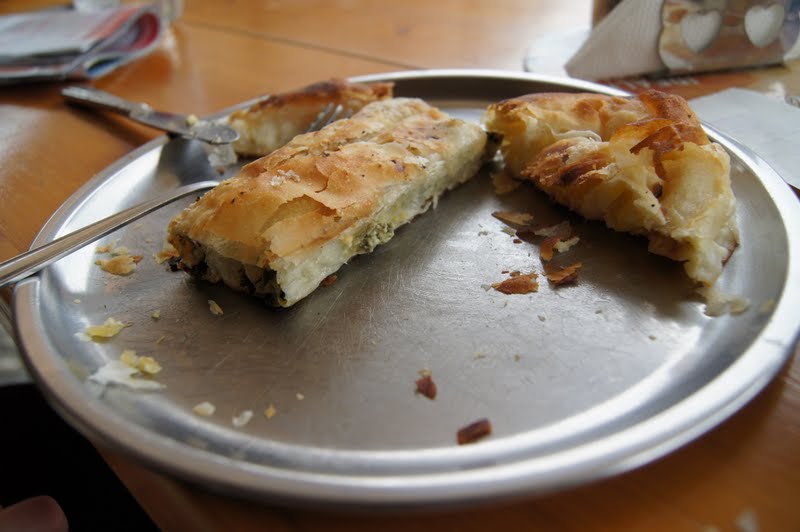
    One of the other things Sarajevo does very well is pastries. The ubiquitous boreks are everywhere - a bit like giant coiled sausage rolls but with lamb - but the vegetarian equivalents are probably a bit nicer and definitely less greasy. Buying a sirnica will get you the same pastry with a mashed up cheese filling (like feta), zeljanica is the same cheese with spinach and krompiruĊĦa contains potato. The tried and tested spinach and cheese combo is delicious, whilst the potato is a bit hard going when combined with the pastry.

      
    You can buy corn on the street for one KM (convertible mark).

    Pizza in Sarajevo is the business! there are a few places in the centre where you can get slices of the proper stone-baked stuff


    The Balkans are not great if you don't eat meat. Omelette, lots of cheese, some nice simple salads, pastas and sandwiches are all available for vegetarians but if you sit down to a proper meal and are after proper evening food its a bit thin on the ground. Typical Bosnian food includes hearty meat stews as above. A little bit of spice, lots of tomato and onion and some beef or veal cooked for quite a long time.


    Best enjoyed with salad and a delicious unsweetened yoghurt drink.


    As well as coffee (and despite a large Muslim population, many of whom are pretty secular) beer is also everywhere. At the Saraveo Pivara, an old brewery, you can get light, un-filtered light and dark beer in about five sizes ranging from 0.1l to one litre bad boy steins.


    Bosnian bread is so much better than Italian! This is somun  and is the absolute business. Elastic, pure white dough with a slight blackening on the bottom and a sprinkle of black sesame seeds on top.


    The bakeries in Sarajevo are amazing, loads of top-notch fresh stuff every morning.


    We enjoyed it with some spreadable cheese that was also wicked.


    On the last day we kept things simple.


    23 May 2011

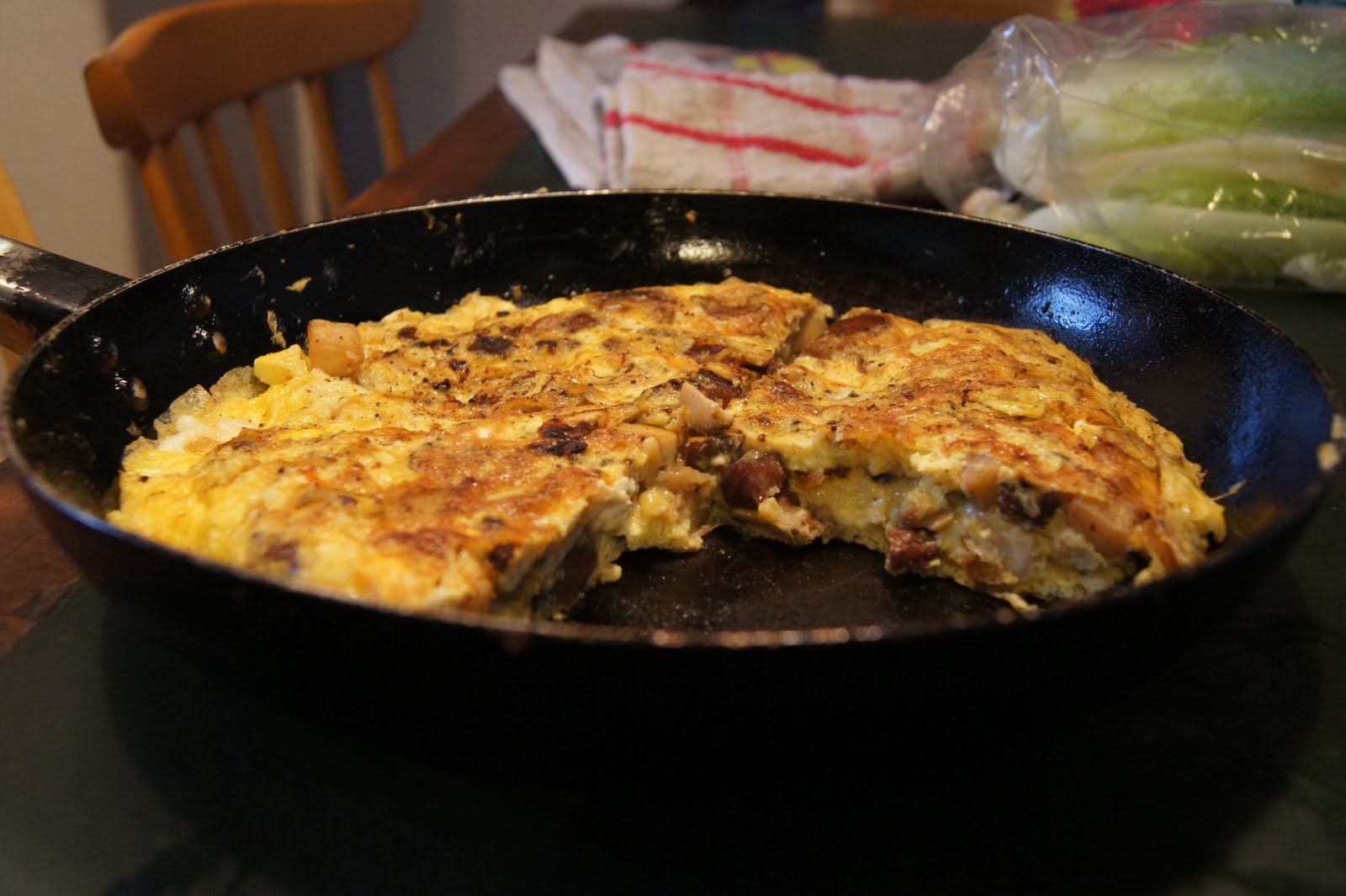
    Turnip and guanciale frittata


    I still have a drying crust of cured pig's cheek in the back of my fridge. The guanciale I paired with leeks to make a simple pasta dish has nearly been used up but I had a hunch that the little left would well compliment the lonely turnip below it in the salad draw. Two full and old-fashioned flavours: turnip and pig fat, surely both eaten (possibly in combination?, answers on a postcard) for centuries in farmhouses across much of Europe. We also had lots of eggs in the fridge and lots of eggs usually leads to one thing - frittata.

    Oh wondrous egg-based matrix! Ready to receive and cosset the humblest of foodstuffs.


    • eggs (quite a few)
    • guanciale (or another fatty pork product such as pancetta or chorizo)
    • turnip
    • nutty mushrooms

    Cut the guanciale into small dice. Being so fatty you want to get it really crisp and it's going to be harder to do this with bigger pieces (I wish I'd gone smaller). Set aside.

    Fry on a gentle heat to render the fat and being the crisping. Continue until tantalisingly browned.


    Cut the turnip and mushrooms into dice twice the size of the meat. Fry the turnip in the pork fat for ten minutes in a fairly low heat to cook and begin to caramelise. Add the mushrooms and fry for five minutes. Turnips respond well to black pepper: add according to taste.
    Reintroduce the guanciale.

    Beat the eggs and pour into the mixture. When it begins to firm up work over the bottom of the frittata with a spatula to prevent sticking. After five minutes either flip the frittata over by first transferring to a plate or finish under the grill.


    Serve with a salad and bread.

    with radish and beetroot salad

    17 February 2011

    A salad with truffles and a mushroom pie of sorts

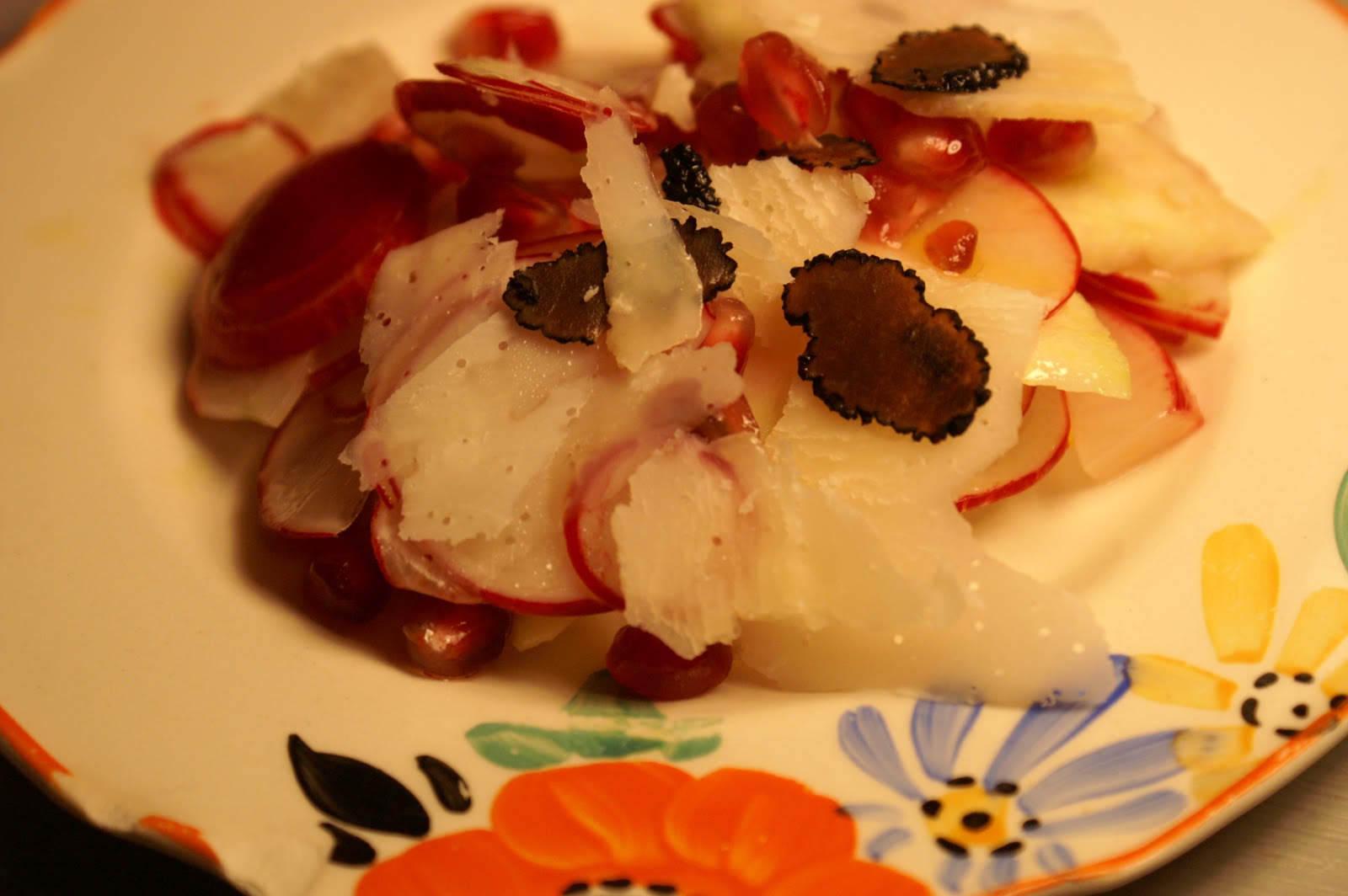
    Nicked from Bocca Di Lupo, a valentine's day salad seemed like a good excuse for us to try some of the truffles waiting in the cupboard.
    • radish
    • celeriac or kohlrabi at a push
    • truffle or truffle oil
    • pecorino or parmesan
    • pomegranate

    Slice the veg as thin as possible and artfully strew with pomegranate seeds (is seeds the right word?) and lashings of parmesan. Drizzle over the truffle oil and/or slice the truffle on top. Top up with some extra virgin and a splash of red wine vinegar.

    When I've had this salad at the restaurant I think they also put parsley in it which is a good clean, green addition. The first time it combined normal radishes and slices of a giant black type and the second time radish with celeriac. Could it also work with mooli perhaps? I couldn't lay my hands on any celeriac so went for kohlrabi, remembering Bread & Wine doing something nice with it sliced raw and thin and dotted with a lemony oil. In truth I think it's a pretty rubbish vegetable but in thin slices it can at least lend a welcome crunch.

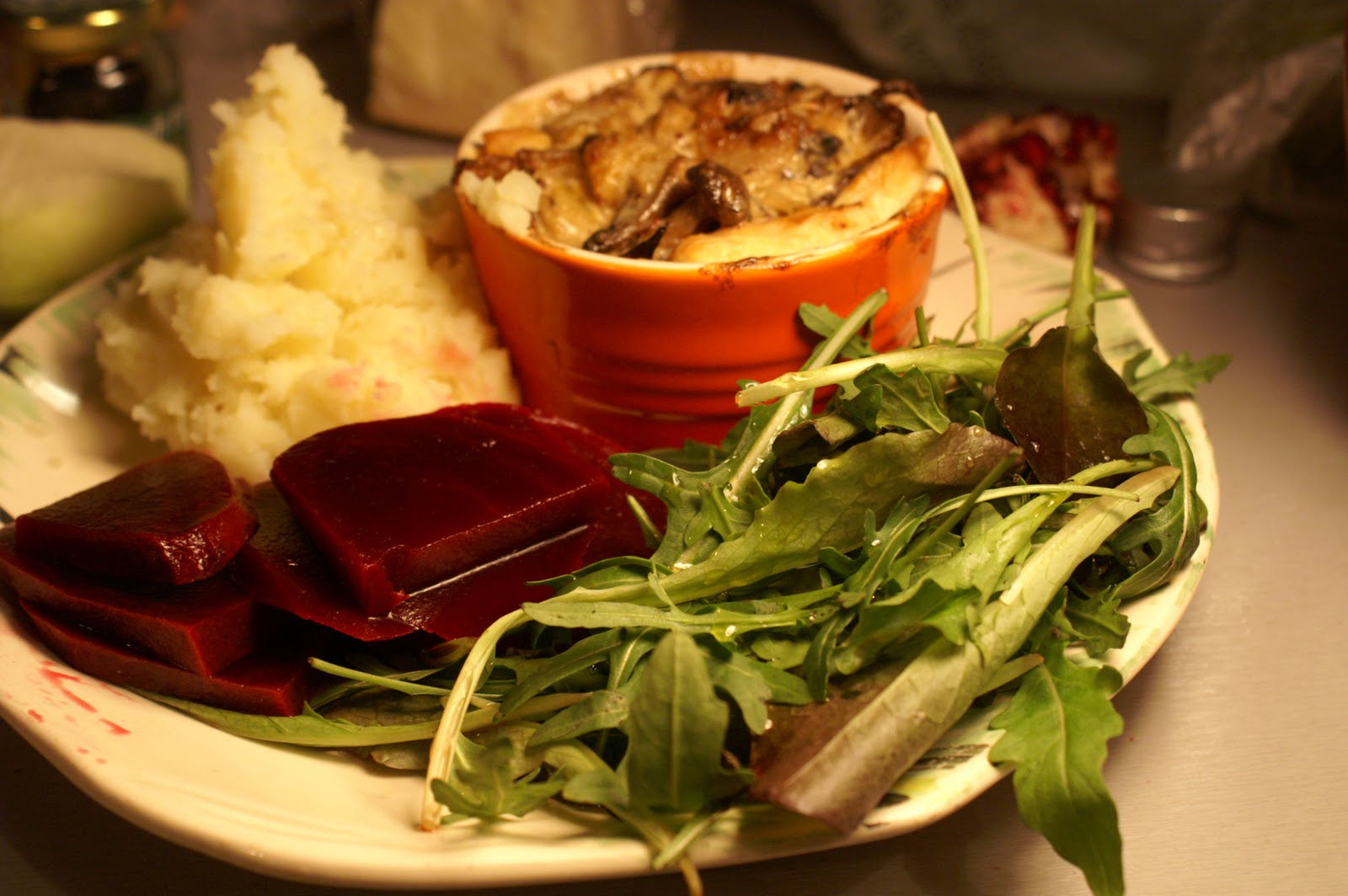
    And then a supreme mushroom pie (kind of).


    • mixture of fresh musrooms
    • dried porcini
    • tin of those small and slimy Italian ones found sometime in antipasto
    • onion or leeks
    • double cream
    • sage, garlic, Dijon mustard and drop of balsamic vinegar

    Blind bake some pastry pie-bottoms in remekins.

    Fry the onions slowly for half and hour with some butter until really soft. Rehydrate the dried mushrooms in boiling water. Add sage and garlic to onion mix and fry, then add the fresh mushrooms. When their leatheriness had gone add the refreshed porcini with their juice and then the cream and vineger. Correct seasoning, add to the pastry shells and bake. The sage, cream and mushroom combo is the business!
     
     A fine dinner with some mash and veg

    Happy valentine's day team.

    15 February 2011

    Tagliatelle with guanciale and leek


    I got some goodies in Bologna a few weeks ago and wanted to try this guanciale I got, along with  bottarga (tuna, not the phenomenally expensive mullet version) and a fat rock of parmesan, from a nice looking deli. It's made from the cured jowl of a pig and I had never had it before.

    This is just a simple pasta combo - the meat has a deep, almost dusty savouriness to it, the leeks offer a bit of greenery and the chilli and garlic (plus some parmesan and black pepper at the end) complete the savoury megamix.

    Ingredients (for one)
    • eight fat matchsticks of guanciale
    • one garlic clove
    • one pinch dried chilli
    • one medium leek
    • one big grate parmesan

    Fry the guanciale. The fat has an amazing perlescent quality and becomes translucent when heated. I recommend going through the translucent stage and well into the stage of crisp - it's going to be a but rubbery otherwise. Some of the fat renders out and will coat the pasta if boosted with a drop of olive oil (definitely time to bring out the extra-spesh-extra-virgin).

    When this is half way done add the leek to soften. I like a lot of leek and wish I had put more in but this is at your discretion naturally! Add the garlic and chilli half way through the leek softening. When everything is looking good add to some cooked pasta (you’ve had that on the boil all this time, right?) and things should be looking lovely.

    Sweet

    10 January 2011

    Pasta e fagioli

    Fiending for a cheap and cheery soup fix I trawled my Google reader archives and found this excellent looking recipe for Pasta e fagioli. As a peasant dish I think the ingredients are fairly flexible and I was happily able to make something from the stuff in my cupboard and fridge. Out went the bolotti beans and in came the chickpeas. Some beautiful tiny tomatoes went in instead of a whole tin and a crumbled dried chilli or two subbed for the fresh one. Also a drop of cream left over from the pheasants. What’s good here is that if you include a decent amount of pasta it becomes a meal in itself. The gentle crushing of the veg releases enough starch to thicken the liquid which raises wholesomeness and satisfaction levels.


    The ingredients can be found in the link. I added some extra parmesan at the end and only roughly followed the recipe but can confirm it a good one. Thanks rachel eats!

    1 November 2010

    Ribollita and pesto

    Man, I can't stop cooking from Plenty! I can't remember the last cookbook from which I not only wanted  in a vague sense to cook but actually did get around to making this many recipes. This time it's his take on ribollita, proper peasant fare, with some pesto. There must be 1,001 recipies for this.


    Onion and vegetables go into the pot to soften in olive oil. The herbs are then added and everything cooked gently for a short while.


    Five minutes before serving chickpeas go into the soup. Meanwhile into the magimix go basil, parmesan, olive oil, salt and pepper for the pesto. No nuts around but that's not a problem I feel.


    Ottolenghi suggests baking the bread until crisp and then putting into the soup which seems a bit silly to me - why go to the trouble of drying it out to put it in a load of liquid? So instead I fry some long chunks of Turkish bread in olive oil and butter. Everyone gets one on top of their soup.


    Delightful stuff - heartening-healthy rather than worthy-healthy in taste. I like the inclusion of fennel here but in truth you could put almost anything in the soup.